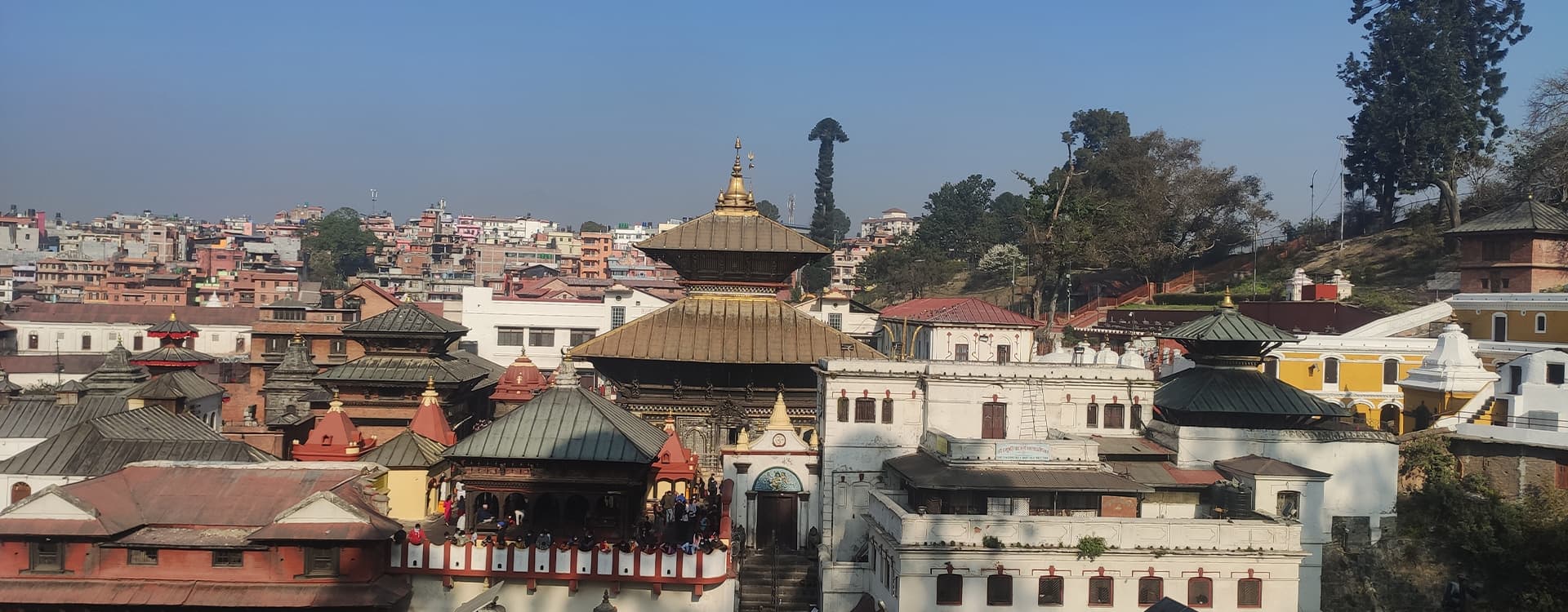
Nepal is a small country nestled in the lap of the Himalayas. As Nepal lies in himalayas Range, it is not only himalayan destination, it is one of the important Spiritual destination for many religions like Hinduism and Buddhism. The Himalayas of Nepal are also part of the spiritual connection mentioned in many holy books and ancient history. Nepal is the home of many temples, holy rivers, and many myths.
Pashupatinath Temple
Pashupatinath Temple is an Identity of Hinduism in Nepal. It is a trademark of Nepal for every visitor. The temple represents Lord Shiva, also called Mahadev, "The Head of All Hindu Gods". This sacred Shiva temple is located 1KM West for Tribhuvan International Airport and 5KM east of Thamel, the tourist hub. Situated at the bank of the Bagmati River, the temple was constructed before the 5th century by Supuspadev, a Licchhavi king who ruled the Kathmandu Valley. Later on, gold-plated doors and a roof were added by Bhaskar Verma, a Licchavi ruler who ruled during the 6th century. The structure of temples was amended many times.
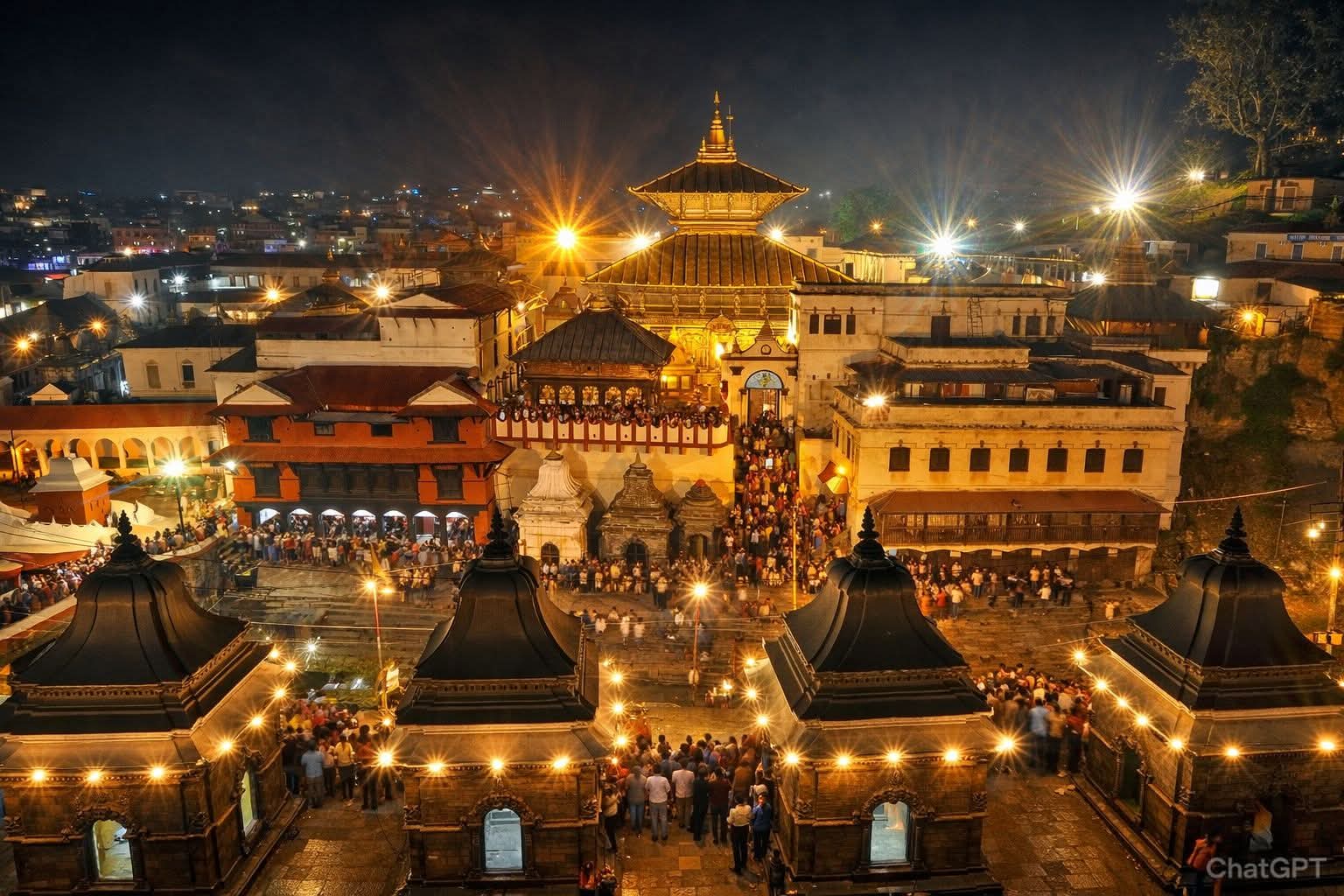
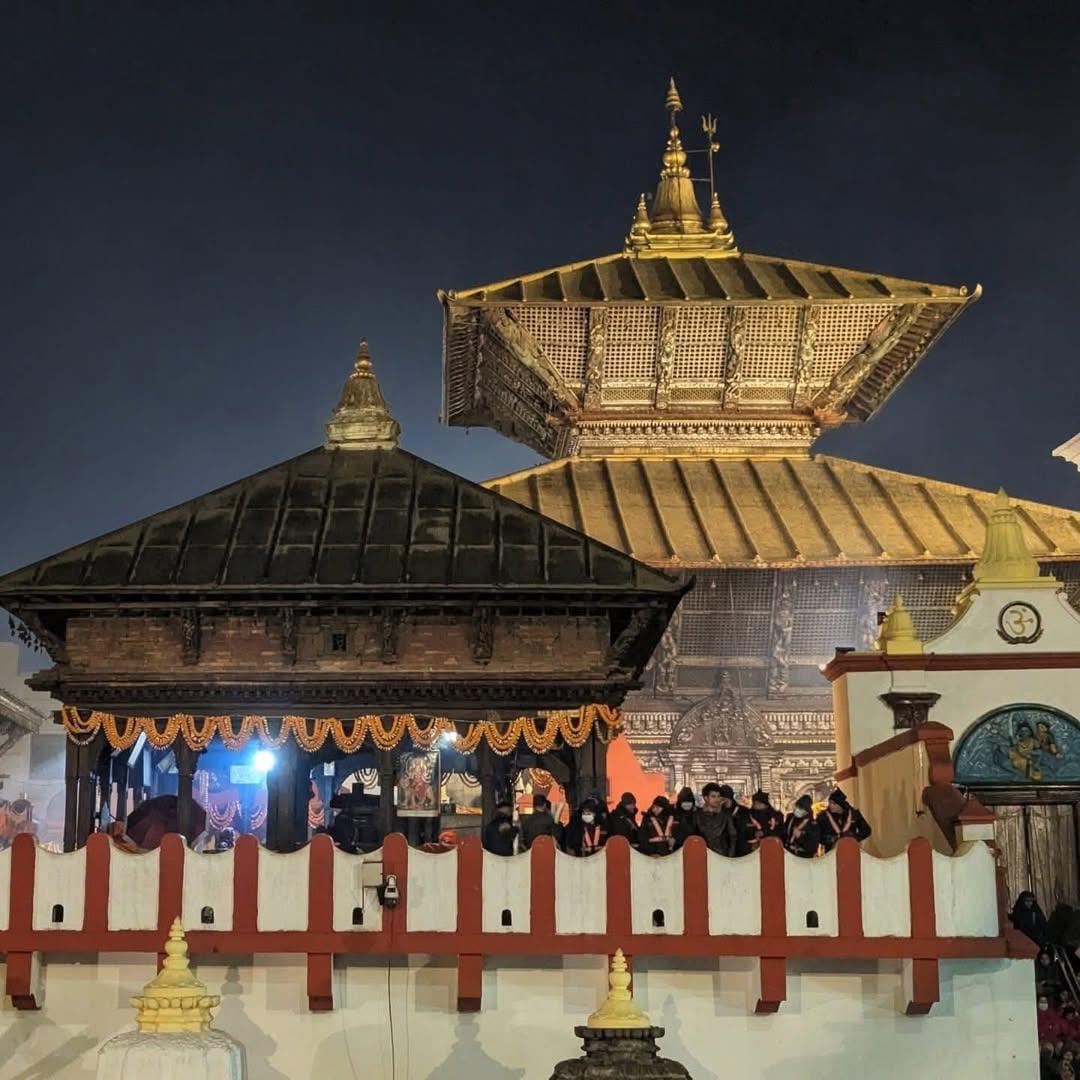
The two-story pagoda-style temple features four doors, one for each cardinal direction. Inside the temple, there is five faced Shiva Lingam- the representative of Lord Shiva. Four face in each side and one face upward, a total five faced Shiva Lingam is worshipped by Bhatta Pujari from South India. The temple offers every Hindu Devotees to blessed from Pashupatinath Temple. The temples open from 4 A.M. to 7 P.M. after evening Aarati. Every morning, the temples offer a special Pooja to Lord Shiva at a cost. Besides the Main Shiva Temple, there are manny others temples like Basuki Nag Temple, Sample of Budhanilkantha Temple, Krishna Temple, Ganesha Temple, Manakamana Temple, Radha-Krishna Temple, Bhairav Temple, Hanuman, 108 Sacred Shiva-Lingam, and many Goddesses in the form of Durgas. The Pashupati Development Committee takes care of the Temples and the management of the Temples and Priest. During festivals like Teej, Shivaratri, and Shrawan Monday, thousands of devotees are blessed by Mahadev, whereas hundreds of devotees are during normal days.
Just next to the main temples, the dead bodies are cremated as the bagmati rivers are considered a holy river. The family perform ritual funeral procedure and fire to dead bodies. The visitors can observe the traditions of Nepali culture. After crossing the Bagmati River, the settlement facilities are facilitated for South Indian Priests. Over 246 hectares (approximately 2.46 square kilometers) are managed by Pashupati Trust. Transport Parking, Funeral House, Temples, Different Ashrams for Old People, Pashupati Jungle- where Lord Shiva and Parvati hide in the form of Deer, etc, are managed by Pashupati Development Committee.
Muktinath Temple - Sacred Mukti-Dham
Nestled at an altitude of 3710m, the Muktinath temple is one of the high altitude Temples devotees of Lord Vishnu. Muktinath Temple know as Mukti-Dham or Mukto-Kshetra (The Liberation of Life), is one of the sacred pilgrimage sites. Hinduism and Buddhism reversed the Muktinath Temple as their religious sites.
The Hindu Devotees believe it to be the Muti Kshetra, where Lord Vishnu manifested from a Shaligram while meditating on this region after the curse of Vrinda. The Temple is also one of the 108 Divya Desam outside India. The Buddhist devotees believe that Guru Rinpoche (Padmasambhava) meditated here while travelling to Kailash (Tibet). The temple is a symbol of the coexistence of the five elements—earth, water, fire, air, and space. The temple is revered as Chumig Gyatsa (Hundred Waters), blessed by Guru Rinpoche (Padmasambhava) during the 8th century CE, marking its significance in Vajrayana Buddhism.
Pilgrims believe that showering at 108 sacred water taps, dipping in holy Ponds and Darsan from Jawamai, grants salvation from the cycle of birth and rebirth. With these religious values, thousands of devotees came here to be blessed by Lord Vishnu and granted Mokshya ................................................. How to reach Muktinath Temple
Janaki Temple (Janakpur)
Janakpur is one of the Oldest Pilgrimage Sites in Janakpur District of Nepal. It has different connection with Ramayan and ancient Kingdom of Nepal. Itr is the birth place of Goddess Sita and wedding place of Lord Ram with Sita as per Hindu mythology.
The Janakpur City is connected with Story from Epic Ramayan. The king of Janakpur, popularly known for virtue and wisdom. Once, King Janak pluge the field, he found an infant in the field. Then he took to his palace and grewup in the palace. At the time of marriage, King Janak organise an event of Swayambhar to search best groom for Sita. The condition was to lift and string the divine bow of Shiva (Pinaka). Many princes failed, but Rama, the prince of Ayodhya, broke the bow while trying to string it, winning her hand. And Sita married Rama and was admired for her beauty and virtue.
Here, Janaki Temple bring this historical History. Along with Janaki Temple, there are many spiritaul sites like Ram Mandir, Wedding Venue, Janakpur Dham (Janakpur Palace), Holy Ponds Ganga Sagar and Dhanusha Sagar, etc. Thousands of Hindu Devotees came here to see the Birth Place of Sita Mata and Janaki Temple. Those who came for Ram Mandir in Ayadhya, it is belief that they should visit Janaki Temple. So the Janakpur is another Pilgrimage SItes of Nepal, you shouldn't missed it.
Manakamana Temple (Gorkha)
Mana meaning from Eternal Heart and Kamana meaning Wishes so Manakamana meaning "The Eternal Wish fulfilling Goddess". Located at Gorkha district, through the bank of Trishuli River, A saced Hindu Goddess Temple Manakamana Bhagwati temple- The Incarnation of Goddess Parvati is establised. The Temple is nestled at the hilltop, easy excessible by 10 min of Cable Car and surrounded by mountain peaks, the temple is widely famous among Hindu Devotees.
In the 17th century, King Ram Shah of Gorkha’s queen was believed to be an incarnation of Goddess Bhagwati, a secret known only to her devotee, Lakhan Thapa. After the king discovered this, he died, and the queen performed Sati (ritual immolation). Legend states that Lakhan Thapa later found a stone that poured blood and milk, which he recognized as the goddess, establishing the first temple there.
With easy excessible by Cable Car or alternative road transfer, Manakamana Bhagwati temple is being one of the pariotized Mata Temple in Nepal. Every Year, Thousands of National and International tourist visit Manakamana Temple. As per recent analysis, Hindu Devotees are more attracted to Mata Temple and more attracted to be religious. In every tour, Nepali travel agency Include Manakamana Temple as their main destination after Pashupatinath temple. As per our suggestion, Travellers may take half day sightseeing in Kathmandu and heading towards Manakamana and Overnight Manakamana hotels. This is for easy Darsan as there is no more devotees in Early Morning otherwise there is very long queue to make Darsan in Manakamana Temple. Sometime, 4-6 hrs long queue for Darsan so we suggest to overnight at Manakamana hotels after Cable car so you will get best Darsan.
Itinerary Sample
- Day 01- Kathmandu Arrival
- Day 02:- Half Day Sightseeing, Drive to Manakamana. Overnight at Manakamana Best Hotels
- Day 03:- Manakamana Darsan with full Satisfaction, heading towards Pokhara or your destination.
Gosaikunda Lake (Rasuwa)
Gosaikunda is another Pilgrimage sites located at Rasuwa District of Nepal. The Kunda is directly connected to Lord Shiva in different story. Every Year, twice in year, thousands of Hindu and Buddhist devotees blessed from Gosaikunda and the holy water flow from Kunda utalize to produce many hydroelectricity and finally mixed with Gangas.
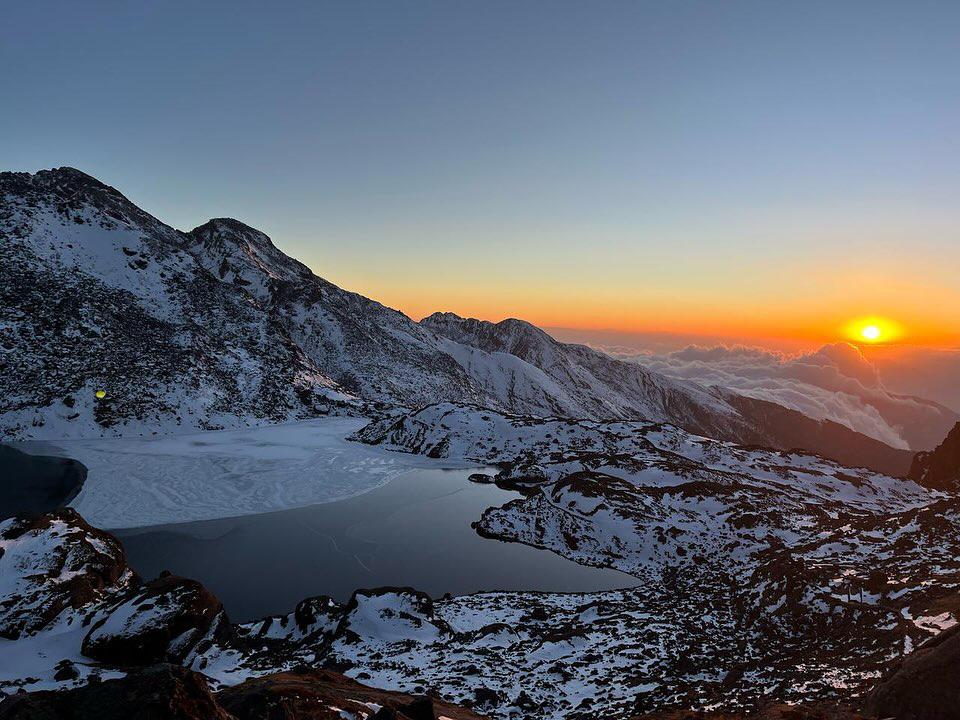
From the story of Samundra Manthan, The lord Shiva swallow the poison Halahala to save the world. Once he sallowed the poision, the burning sensation became unbearable. He then created this lake to soothe himself. Then he struck his trident (Trishul) to mountain and water poured from the mountain and relief his pain. The lake thus formed is Gosaikunda Lake and the lake is considered his abode and a sacred site for purification, particularly during the Janai Purnima festival
Dakshinkali Temple (Kathmandu)
Changu Narayan Temple (Bhaktapur)
Pathibhara Devi Temple (Taplejung)
Halesi Mahadev Temple (Khotang)
Swargadwari Temple (Pyuthan)
Other Temples
Budhanilkantha Temple
Doleshwor Mahadev
Kalinchowk Bhagwati
Guhyeshwari Temple