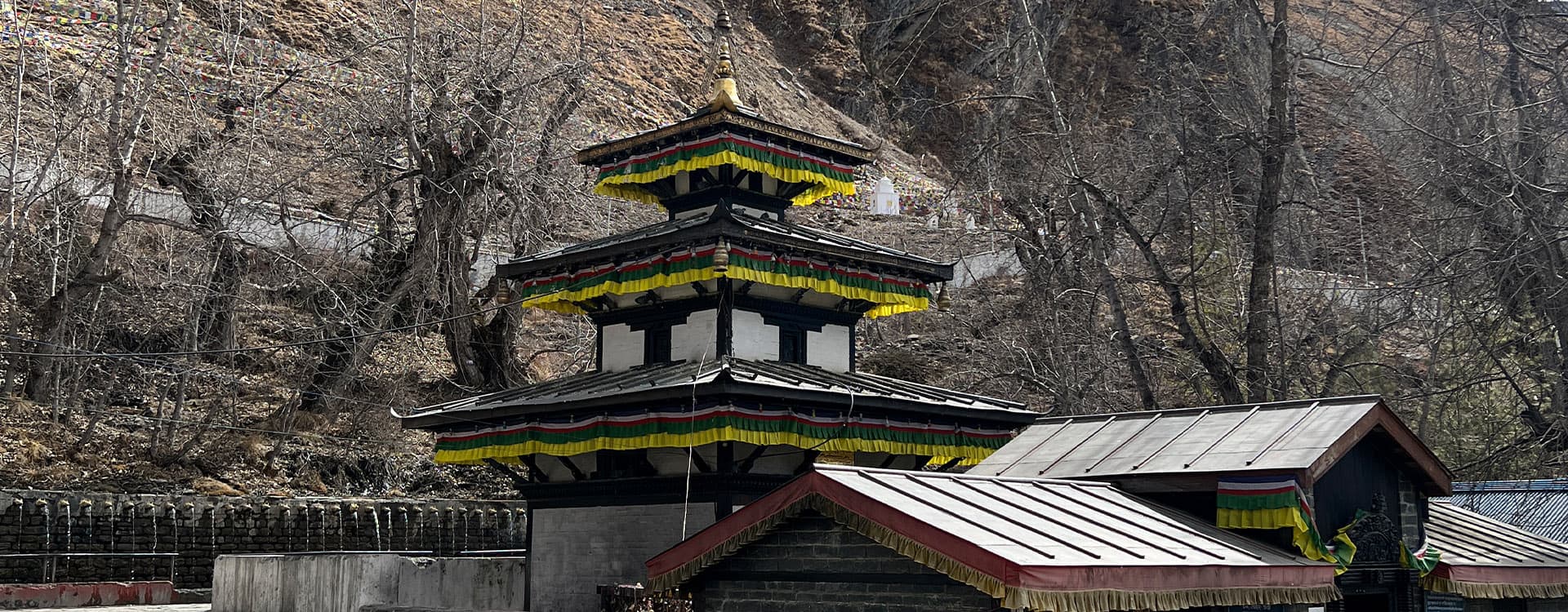
Nestled at an altitude of 3710m above sea level, Muktinath Temple is a sacred Pilgrimage Site. Located in the Mustang district of Nepal, surrounded by mountain peaks and the base of the world-famous Thorong La Pass, Muktinath holds a spiritual connection with the dual religion. Yes, it is true. The Muktinath Temple is worshiped by two religions, i.e., Hinduism and Buddhism, and there are two separate priests in the temple. The Hindu Priest performs morning ritual pooja in the morning and evening, while the Buddhist Aane holds the capture of devotees during the daytime.
Muktinath Temple and its surrounding
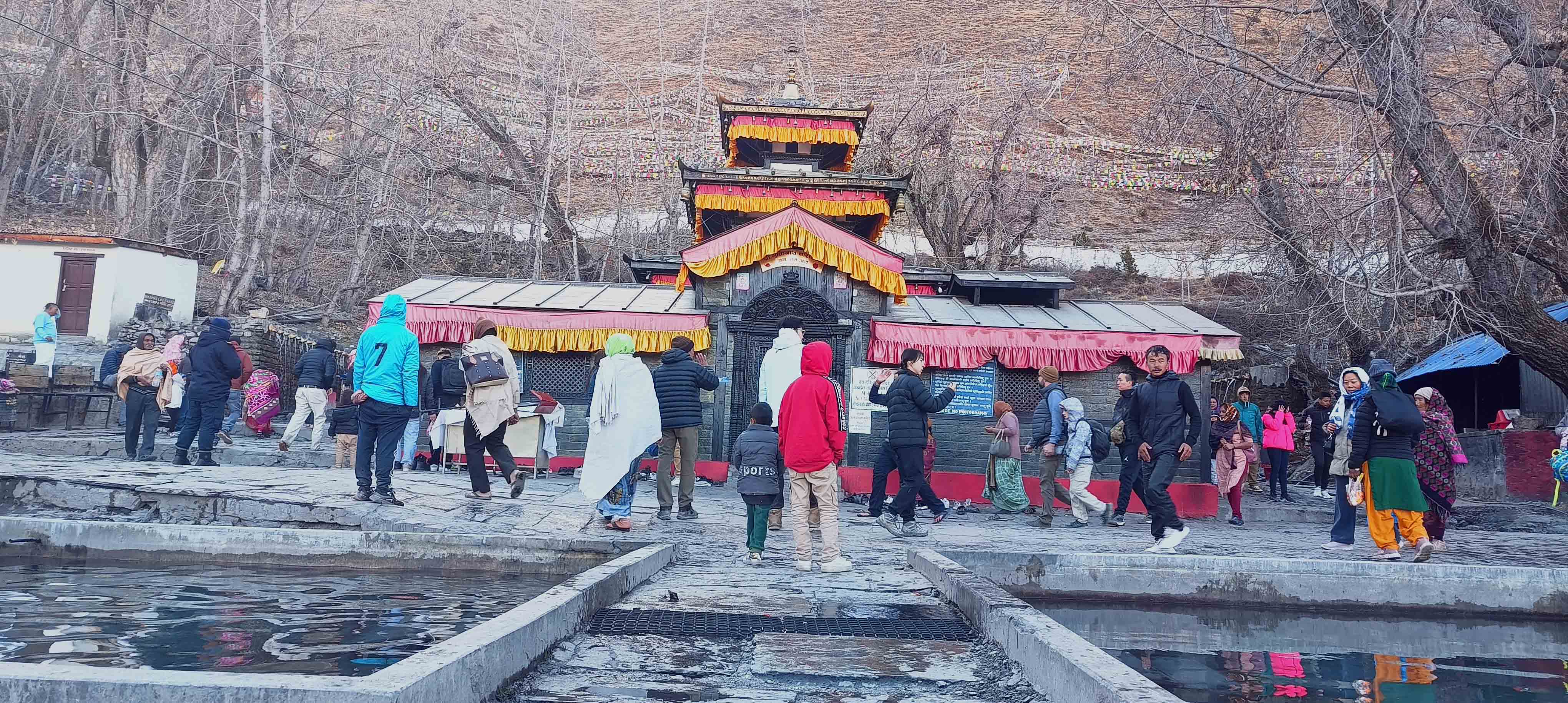
Muktinath Temple is one of the sacred pilgrimage destinations for Hindu and Buddhist devotees. The temple was constructed in the Pagoda style in 1815 A.D., in the 19th century, by Queen Subarna Prabha Devi, the wife of King Rana Bahadur Shah. Nestled at the base of the world's famous Thorong La Pass, and just below a mysterious cave city- Upper Mustang, the temple holds the mutual harmony and blessing for every visitor who visits through the way.
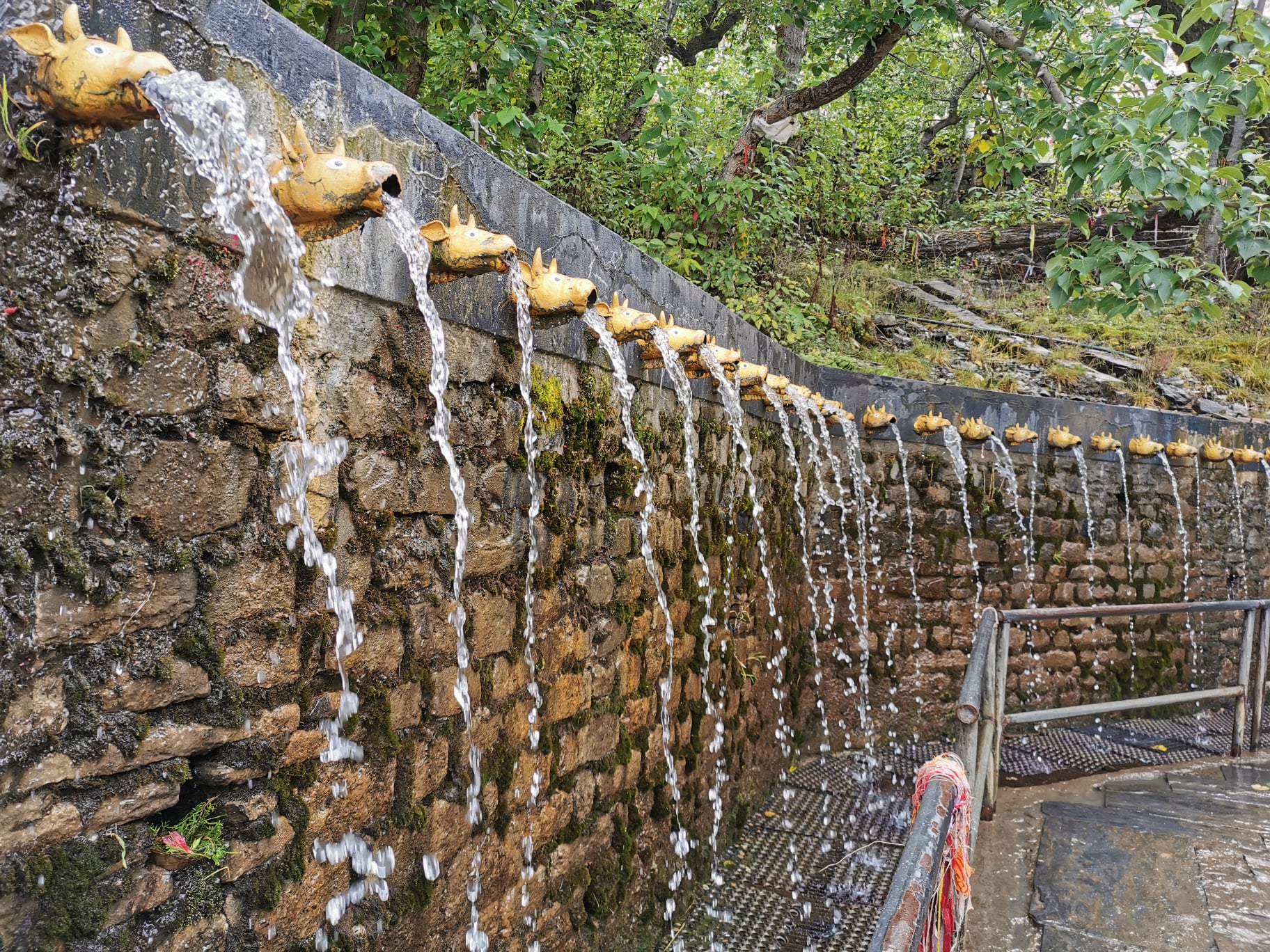
The pagoda style is a single-storey, modest structure with a three-roofed temple, surrounded by colorful prayer flags. The temple is surrounded by water taps from three sides (West, North, and East Sides) and 2 ponds from the South Side. The 108 holy water taps represent Mukti-Dhara, and bathing from those 108 sacred taps cleanses the sins. The statue of Lord Vishnu, along with Goddess Laxmi and Goddess Saraswati. Similarly, the Buddhist devotees worship those statues, the main idols as ‘Luwang Garbo’, meaning the king of snakes, and the idols beside them as ‘Naagdevi’ or the goddess of Snakes.
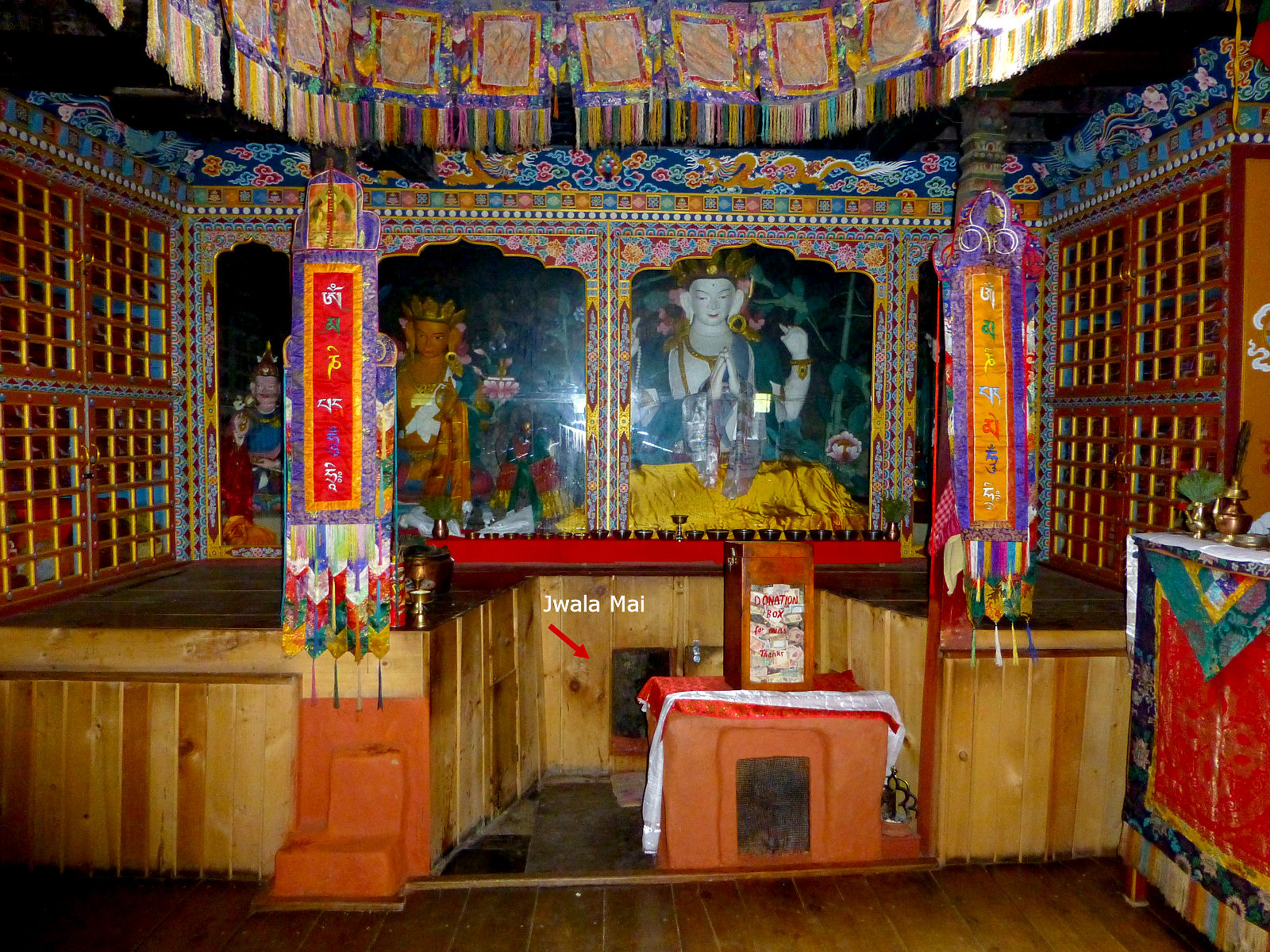
After exploring the main temple, there is also the Buddha Park on the east side of the main temple. The devotees can observe the Buddha Statue, enjoy with surronding mountain peaks from the park, and take enough photographs. Just next to Buddha Park, there is Jawamukhi Mai, which means Natural Flame from the underground. A Buddhist statue is there, representing peace.
History of Muktinath Temple
Hindu Myths
There are many stories connected to the Muktinath Temple. Among those many stories, here is one story. As per many Puranas, there was a great fight between Lord Shiva and Janandhar Rakshak, and Jalandhar was a very powerful Rakshak. To win over Jalandhar was almost impossible, as the wife of Jalandhar was a strong devotee of her husband and got the blessing that her husband would be powerful until intercourse with others. So the Lord Vishnu got the idea and, with Jalandhar's face, the Lord Vishnu contacted Vrinda, and the power of Jalandhar was dismissed. Once the Vrinda got to know, it was late, so the Vrinda gave the curse to Lord Vishnu to become stone and to experience separation from his wife (Lakshmi/Sita). So as per the curse, the Lord Vishnu was reborn in the form of Shaligram- Stone, and Vrinda died, and the Tulsi Plant formed from the dead bodies. The curse to be separated from his wife was later fulfilled during his incarnation as Lord Rama, when he was separated from Sita.
Lord Vishnu accepted the curse and blessed Vrinda for her devotion, promising to marry her in her next life. She was subsequently transformed into the sacred Tulsi plant. The marriage between Vishnu (in Shaligram form) and Tulsi is celebrated annually as Tulsi Vivah.
Buddhist Myths
Muktinath is associated with Padmasambhava, the founder of Tibetan Buddhism, who is believed to have meditated here during his journey to Tibet in the 8th century. For Buddhists, the temple is a symbol of the coexistence of the five elements—earth, water, fire, air, and space. The temple is revered as Chumig Gyatsa (Hundred Waters), blessed by Guru Rinpoche (Padmasambhava) during the 8th century CE, marking its significance in Vajrayana Buddhism.
Spiritual Significance of Muktinath Temple
Liberation of the Recycle of Life
After the curse of Vrinda, lord Vishnu manifested in the form of the Shaligram Stone. Shaligram originates from the Kali-Gandaki river, which flows through the Muktinath region of the Himalayas. After long meditation in himalayas (Muktinath area), the lord vishnu regain his original form. As the lord vishnu got Mukti from the Shaligram stone to his own form, the meditation center is called Mukti-Kshetra (The land of Liberation) or Mukti-Dham (The Abode of Salvation), and hence, the temple is established with the name of Muktinath Temple (the Lord who grants moksha).
108 Divya Desams
Among the 108 Divya Desams, Muktinath holds a special spiritual importance because it is the only one that lies outside India and lies in the high himalayas as revealed as the sacred site for Mukti-Kshetra, the specific area of liberation.
108 Sacred Water Taps
The main attraction of Mukti-Dham is the 108 Sacred Water spouts coming from the bull- faced water taps. It is believed that bathing with the sacred water taps cleans all the sins and purifies the soul.
Jwala Mai (Eternal Flame)
Next to the Muktinath temple, a continuous flame burns from Underground. Those flames from underground gas symbolize the union of the five elements of fire, water, air, earth, and space.
Saligram Stones
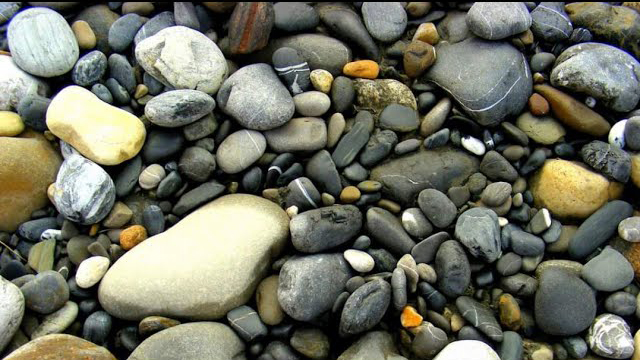
The Shaligram Stone is the form of Lord Vishnu, and originated from the Kali-Gandaki river, which flows from the Muktinath Region and can be explored on the way while traveling to the Muktinath Temple, so it is also special for devotees.
For Buddhists
Muktinath (Chumig Gyatsa) is a sacred place associated with Guru Rinpoche (Padmasambhava).
Why to Choose Luxury Muktinath Temple Tour?
Everyone is travelling to their destination. The main thing is how easy you are travelling. The luxury means not only hotel accommodation, but also the transfer facility, hassle-free, stress-free, well-organised travel Itinerary and gourmet meals. With our Luxury Muktinath Temple Tour, we focused on
- Luxury Accommodation in 4/5 star in Kathmandu and Pokhara, with the best one in Jomsom/Marpha
- Private comfortable A/C Transportation (Suv/ BYD)
- Hygienic, curated meals suitable for pilgrims
- Schedule flights to available destinations like Kathmandu, Pokhara, and Jomsom
- Private Helicopter Service if required (As per Client Request)
- Well-Knowledgable Tour Guide
How to reach Muktinath Temple in a luxurious way?
Being a high-altitude spiritual tour, Muktinath Temple is one of the sacred vishnu temple. To explore the Muktinath pilgrimage, there are three different ways. As per the client's requirement, from where the Clients feel comfortable, we (Utmost Destination Travels) operate the tour. Mostly, the client arrives at Tribhuvan International Airport, so we start from here. Besides Kathmandu, some clients ask for different Packages like
- Luxury Muktinath Tour Packages from Bangalore
- Luxury Muktinath Tour Packages from Hyderabad
- Luxury Muktinath Tour Packages from Malaysia
- Luxury Muktinath Tour Packages from America
- Luxury Muktinath Tour Packages from Gorakhpur
- Luxury Muktinath Tour Packages from Raxual
Helicopter Tour to Muktinath
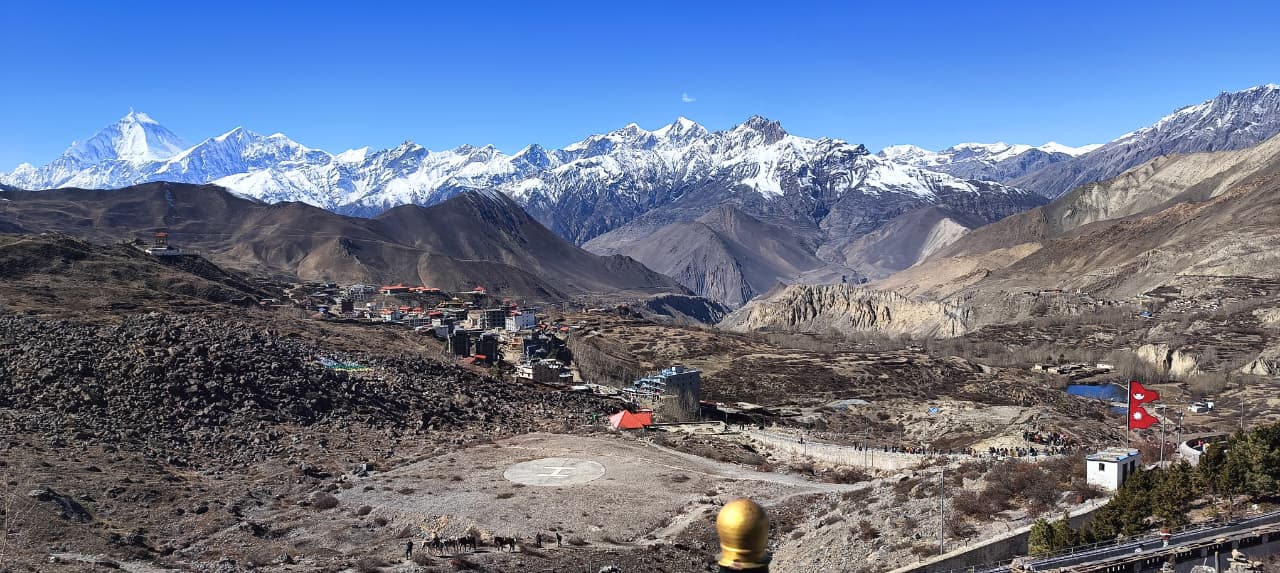
There is a helicopter service from Kathmandu to Jomsom or from Pokhara to Jomsom. The charter helicopter takes 75-90 minutes from Kathmandu and 40-45 minutes from Pokhara. Here, the helicopter flies to Muktinath in the morning after having breakfast. The helicopter landed on Heli-Pad just nearby temple and walking a few steps. You can take one hour off to explore the Muktinath Temple and then fly back to Pokhara. And a guide to the Pokhara city tour.
Itinerary for Muktinath Helicopter Tour
Day 01: Kathmandu Arrival
Day 02: Kathmandu Heritage Tour, Evening fly to Pokhara
Day 03: Helicopter to Muktinath, Muktinath explore and fly back to Pokhara, City Tour.
Day 04: Pokhara City Tour, Fly to Kathmandu
Day 05: Kathmandu City Tour
Day 06: Final Departure
Schedule a flight from Pokhara
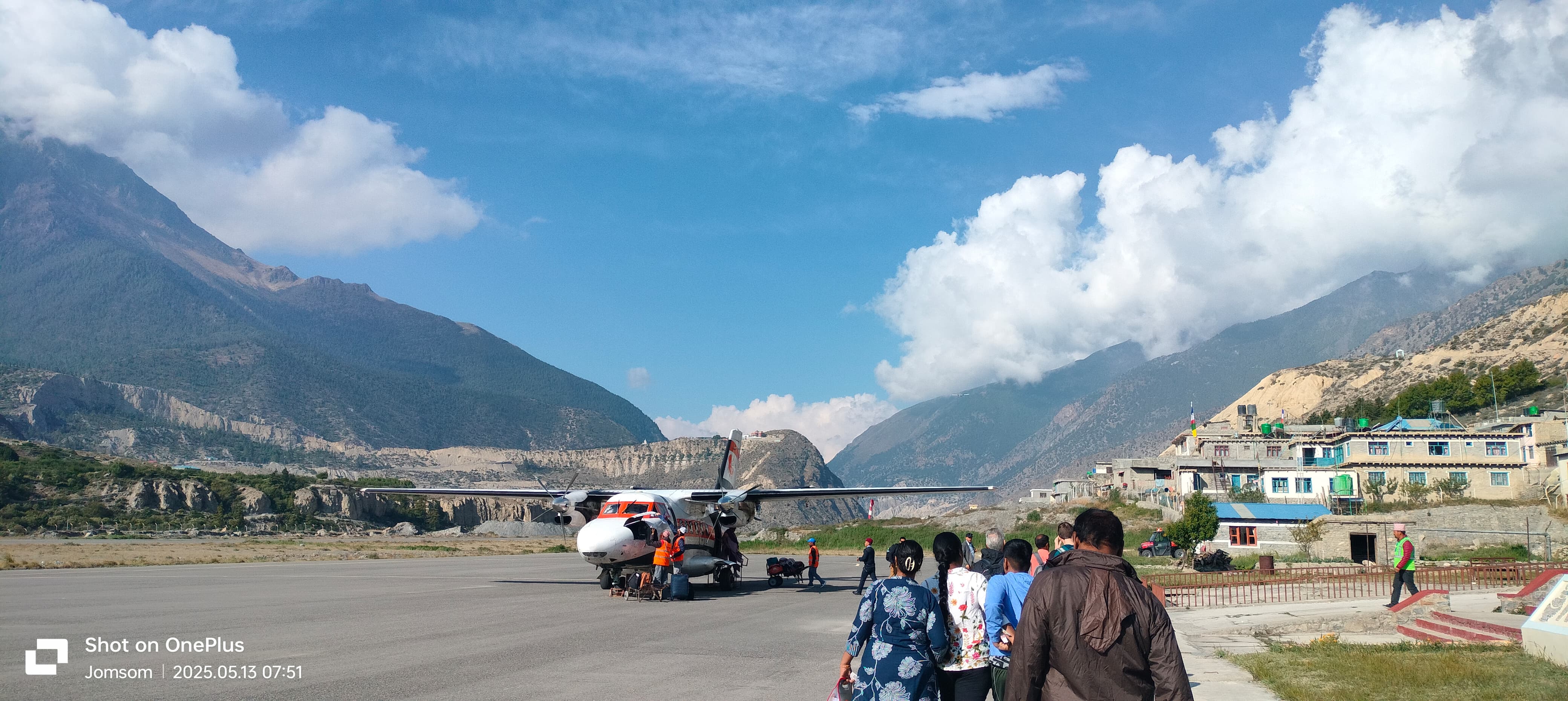
There is a scheduled Pokhara to Jomsom every morning from 6 A.M. to 10 A.M., Tara Air and Summit Air operate flights. It is 20 minutes flight to Jomsom and a local luxurious Scorpio jeep to Muktinath Temple. From the parking slot, you have to walk for 20 minutes, and then walk for 10 minutes, step walking to reach Muktinath. You can take your time as per your requirement and finally return to the parking. While returning, you can also explore Tete Lake on the way and Dhumba Lake near Jomsom. And finally, overnight atthe Jomsom luxury hotel.
Itinerary for Muktinath Temple Tour by Scheduled Flight
Day 01: Kathmandu Arrival
Day 02: Kathmandu Heritage Tour, Evening fly to Pokhara
Day 03: Schedule flight to Jomsom, Jeep to Muktinath, Muktinath Explore, drive back to Jomsom after Dhumba Lake
Day 04: Fly back to Pokhara and City Tour
Day 05: Pokhara City Tour, Afternoon drive to Manamakaman, and Overnight ata luxury hotel
Day 06: Manakamana Darsan, drive to Kathmandu and Pashupatinath Aarati
Day 07: Kathmandu City Tour, Overnight at Nagarkot
Day 08: Departure
Luxurious 4WD Jeep from Pokhara
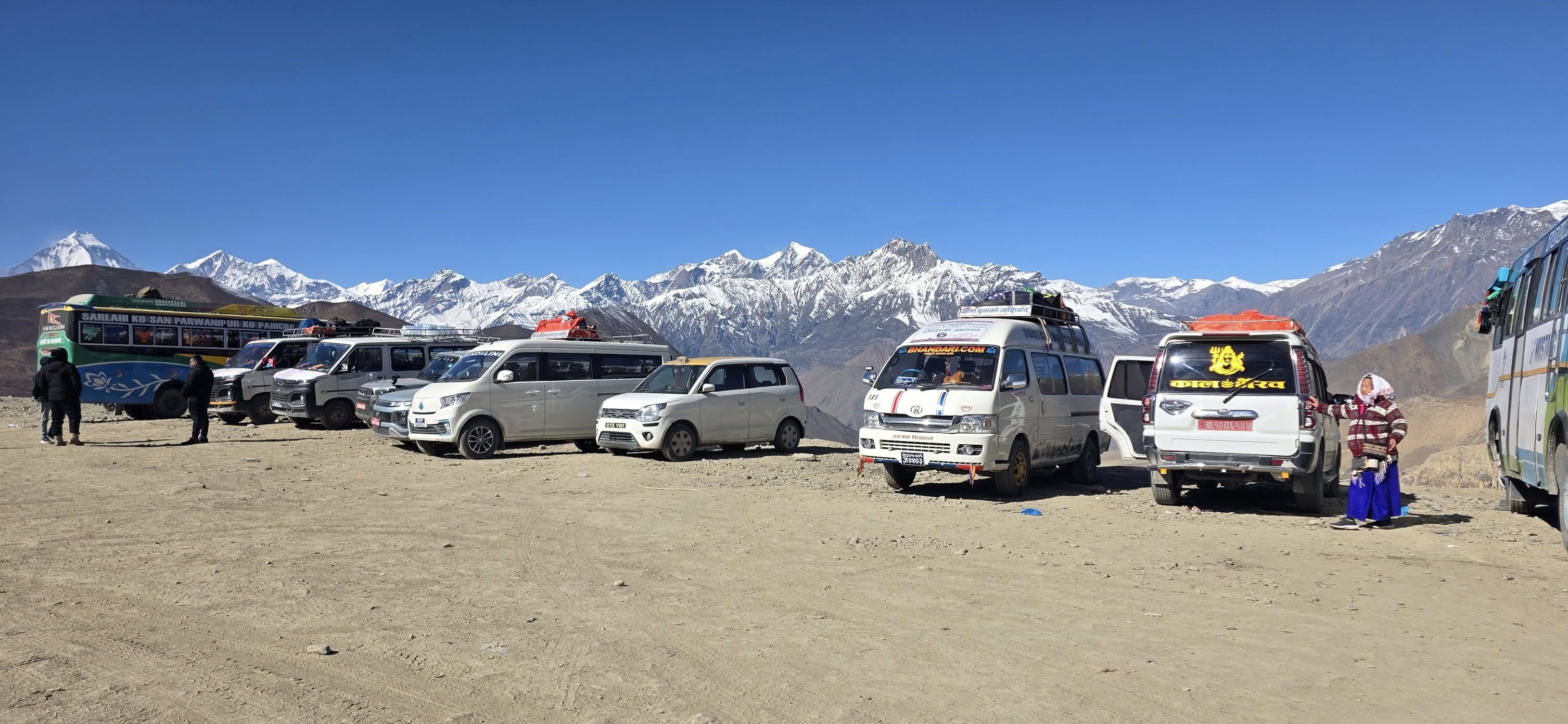
After having breakfast at Pokhara, A Private luxurious 4WD jeep takes you to Muktinath Temple. On the way, you will see various attraction points like small community villages, driving through the bank of the Kali-Gandaki river, enjoying the Rupse Waterfalls, exploring on tatopani water source (Natural hot water), Marpha Village (the apple farm), and finally to Jomsom. The devotees can eyewitness to search for the aligram stone on the Kali-Gandaki River and continue to muktinath temple. Exploring the spiritual Mukti-Dham Yatra and returning to Jomsom. While returning, you can explore Galeshwor Mahadev temple, Baglung Kalika Bhagwati temple, and experience walking on a long suspension bridge at Kusma. Finally, to Pokhara.
Itinerary for Muktinath Temple Tour by Luxury 4WD Jeep
Day 01: Kathmandu Arrival
Day 02: Kathmandu Heritage Tour, Evening fly to Pokhara
Day 03: Comfortable drive to Jomsom with exploring Rupse Waterfalls, Scenic photographs at Kalopani, and Marpha- The Apple Farm
Day 04: Drive to Muktinath Temple, Muktinath Darsan along with other buddha park and Jawa Mai with some monasteries. Afternoon, drive back to Pokhara
Day 05: Pokhara City Tour
Day 06: Drive to Kathmandu with Manakamana Darsan
Day 07: Kathmandu City Tour, Overnight at Nagarkot
Day 08: Departure
Accommodation During Luxury Muktinath Temple Tour
While operating Luxury Tour, The Operators should list out the luxury accommodation throughout the tour. Utmost Destination Travels and Treks also fixed some luxurious hotels throughout the tour. We use similar hotels as per the list
| Destination | 4 Star Hotel Standard | 5 Star Hotel Accommodation |
| Kathmandu | Hotel Ramada Encore, Hotel Lo-Mustang, Hotel Barahi- Kathmandu, Hotel Crowne Imperial | Hotel Yak & Yeti, Hotel Radisson, Hotel Soaltee, Hotel Hyaat Centric |
| Pokhara | Hotel Aathiti Resort, Hotel Temple Bell, Hotel Temple Himalaya, Hotel Heritage and Suites | Hotel Temple Tree and Spa, Bar Peepal Resort, Hotel Pokhara Grande, Hotel Fishtail Lodge |
| Jomsom | Trekkers Inn | Hotel Mustang-Jomsom, Hotel Oms Homes |
| Sarangkot | Himalayan Front by KGH Group | Sarangkot Mountain Lodge by Barahi Group, Le-Glamour |
| Nagarkot | Country Villa, The Fort Resort | Hotel Club Himalaya, Hotel Mystic Mountain, Hotel Soaltee Westend |
Permits and Entrance for Muktinath Temple Tour
While travelling to Muktinath Temple, an Annapurna Conservation Area Project (ACAP) permit is needed. Only register travel agency provides this Permit. The Permit is compulsory for all nationalities other than Nepali Citizens. As per the nationality, there is a price. Indian Passport holders have NPR 1000 as the Permit Charge. A similar facility to the SAARC countries. For Other than SAARC, the permit costs NPR 3000 per person. Whereas there is no charge for children below 10 Years of any nationality. Other than the ACAP permit, no other permits have been implemented yet for Visitors. Later on, some Trekkers Information Management System (TIMS) will be implemented; the decision is pending.
Best Time for Luxury Muktinath Temple Tour
Muktinath Temple is open every month from 6 A.M. to 7 P.M. However, due to the high Himalayas and location, the best time to explore is the spring and Autumn season where skies are clear, and the temperature is mild. Ie. March, April, May, and September, October, November, upto Mid-December are the best times to visit Muktinath Temple.
June, Jul,y and August are considered the rainy season in Nepal, and December, January, and February are the winter seasons. So besides those month is favourable forthe Muktinath Pilgrimage Tour.
Altitude Sickness and Its Prevention during the Muktinath Tour
As Muktinath Temple is nestled at an altitude of 3710m above sea level and our tour starts from Pokhara, which is at an altitude of 800m, there is a chance of high altitude sickness. To prevent high altitude, our team curates proper acclimatization time periods, and in the field, we ask each client for a check-up, and if someone feels uncomfortable, we evacuate them to nearby hospitals and health posts.
Frequently Asked Questions
1. What is the significance of Muktinath Temple in Hinduism and Buddhism?
Muktinath is one of the holiest pilgrimage sites for both Hindus and Buddhists. For Hindus, it is a Mukti Kshetra—a place of liberation where Lord Vishnu is worshipped as Shaligram Narayan. For Buddhists, it is known as Chumig Gyatsa, the sacred place of 108 water spouts, symbolizing spiritual purification.
2. Why is Muktinath called the “Place of Liberation”?
The word Muktinath means Lord of Liberation. It is believed that bathing under the 108 water spouts and offering prayers here helps devotees attain moksha (freedom from the cycle of birth and rebirth).
3. Where is the Muktinath Temple located?
Muktinath Temple is located in the Mustang district of Nepal, at an altitude of 3,710 meters (12,172 ft), near the base of the Thorong La mountain pass in the Himalayas.
4. How can one reach Muktinath Temple from Kathmandu?
Travelers can reach Muktinath via:
- Flight to Pokhara → luxury Jeep to Muktinath, or
-
Flight to Pokhara → Flight/Jeep to Jomsom → Drive to Muktinath, or
-
Luxury helicopter tour from Kathmandu or Pokhara for a faster, more comfortable, and altitude-friendly journey.
5. Is a luxury tour to Muktinath worth it?
Yes. A luxury Muktinath tour ensures:
-
Minimal physical strain
-
Premium hotels and transport
-
Personalized assistance and puja arrangements
-
Better acclimatization and safety
Ideal for senior citizens, families, and international pilgrims.
6. What is included in a luxury Muktinath Temple tour package?
A typical luxury package includes:
-
Private transfers or helicopter service
-
4–5 star hotels in Pokhara & Kathmandu
-
Guided temple darshan and rituals
-
VIP assistance, meals, and permits
-
Oxygen support and medical backup if needed
7. What is the best time to visit Muktinath Temple?
The best months are:
-
March to June (Spring–Early Summer)
-
September to November (Autumn)
These periods offer clear skies, stable weather, and safer travel conditions.
8. Can senior citizens visit Muktinath comfortably?
Yes. With a luxury or helicopter tour, senior citizens can comfortably visit Muktinath with minimal walking and proper medical support.
9. What is the importance of the 108 water spouts at Muktinath?
The 108 Mukti Dhara are believed to cleanse past sins. Bathing under all 108 spouts while chanting Vishnu mantras is considered extremely auspicious.
10. What is the Jwala Mai Temple near Muktinath?
Jwala Mai Temple houses a natural, eternal flame fueled by underground gas—representing the harmony of earth, water, fire, and air, a rare spiritual phenomenon.
11. Is Muktinath part of the 108 Divya Desams?
Yes. Muktinath is revered as one of the 108 Divya Desams dedicated to Lord Vishnu, making it highly significant for Vaishnav devotees.
12. How many days are required for a Muktinath luxury tour?
A well-planned luxury tour usually takes 4 to 6 days, depending on whether helicopter services are included.
13. What kind of accommodation is available near Muktinath?
Near Muktinath, accommodations are mostly clean and comfortable lodges, while luxury stays are arranged in Pokhara and Kathmandu.
14. Is helicopter service available for Muktinath Temple?
Yes. Helicopter tours from Kathmandu or Pokhara are the most convenient and time-efficient way to visit Muktinath.
15. What should pilgrims wear while visiting Muktinath?
Visitors should wear:
-
Warm layered clothing
-
Modest attire suitable for temples
-
Comfortable walking shoes
Luxury tours often provide guidance and packing support.
16. Are special puja and rituals arranged during luxury tours?
Yes. Luxury tours can arrange:
-
Vishnu Sahasranama Path
-
Shaligram Puja
-
Abhishek at 108 spouts
-
Personalized sankalpa rituals
17. Is altitude sickness a concern at Muktinath?
Due to high altitude, mild symptoms may occur. Luxury tours include:
-
Gradual acclimatization
-
Oxygen cylinders
-
Trained guides and medical readiness
18. Do foreign nationals need permits to visit Muktinath?
Yes. Foreign tourists require ACAP and TIMS permits, which are usually handled by the tour operator.
19. Can Muktinath be visited with family and children?
Yes, with proper planning. Luxury tours make the journey safe and comfortable for families, including children.
20. What food options are available during the tour?
Meals include:
-
Hygienic vegetarian meals
-
Indian, Nepali, and continental cuisine
-
Special dietary arrangements on request
21. Is photography allowed at Muktinath Temple?
Photography is allowed outside the temple premises. Inside the sanctum, photography is generally restricted.
22. What spiritual experiences can pilgrims expect at Muktinath?
Pilgrims often describe:
-
A deep sense of peace
-
Emotional release
-
Spiritual clarity
-
Strong devotional connection
23. Can the Muktinath tour be combined with Pashupatinath and Pokhara?
Yes. Most luxury itineraries combine Pashupatinath, Manakamana, Pokhara, and Muktinath for a complete spiritual journey.
24. Is Muktinath safe for international travelers?
Yes. With professional operators, Muktinath is safe, well-managed, and spiritually enriching for international visitors.
25. Why book a luxury Muktinath Temple tour instead of a regular tour?
A luxury tour offers:
-
Peace of mind
-
Time efficiency
-
Personalized spiritual services
-
Comfort without compromising devotion