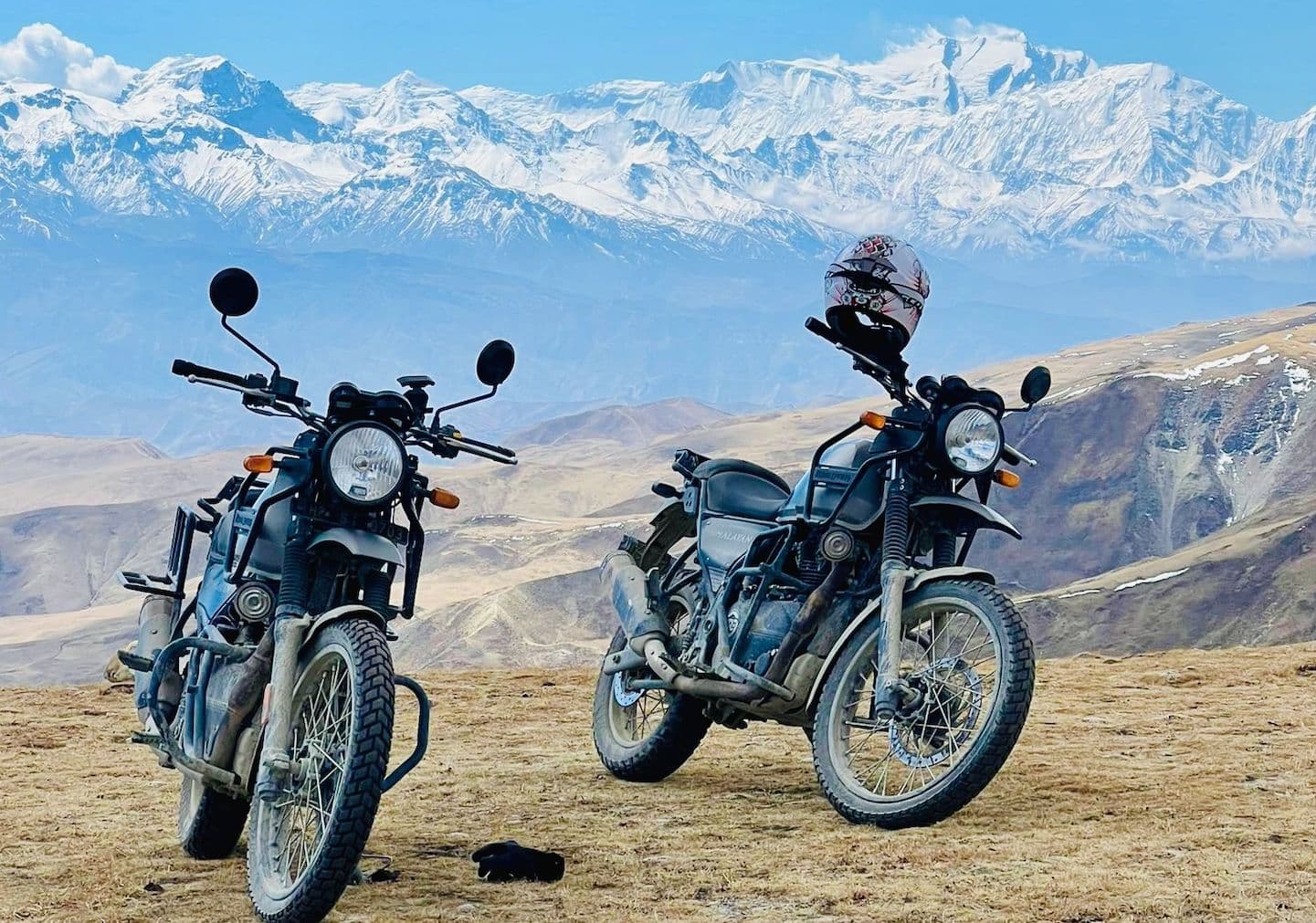
Imagine one rider on a long road. Red cliffs rise on one side. A dry, golden valley opens on the other. The wind is steady, and the Himalayas stand far ahead.
This is Upper Mustang. Once known as the Kingdom of Lo, it stayed closed to outsiders for many years. Today it is one of the most rewarding rides in Nepal. You cross deep gorges, ancient villages and quiet monasteries. You reach the walled town of Lo Manthang, where old Tibetan culture still lives.
A ride here is not like any other. It needs permits, the right season and a strong plan. The roads are rough, and the altitude is real. This guide covers what every rider should know before going.
Ready to ride? Join our 13-day Upper Mustang Bike Tour and let our team handle the details. Message us on WhatsApp to plan your trip.
Why Ride Upper Mustang?
Upper Mustang is unlike anywhere else in Nepal. The land is dry, wild and open, and a bike lets you feel every turn of it. You go at your own pace, stop where you like and see far more than a jeep window allows.
-
Dramatic landscapes: Red cliffs, eroded canyons and the deep Kali Gandaki gorge shape the route.
-
Rain shadow region: Mustang sits behind the Himalayas, so it stays dry when the monsoon hits the rest of Nepal.
-
Living Tibetan culture: Monasteries, prayer walls and old villages line the way.
-
Lo Manthang: The walled capital of the old kingdom is the heart of the journey.
-
Freedom on two wheels: A bike gives you flexibility that a jeep or a trek cannot match.
-
Hidden history: Sky caves and ancient cliff dwellings add mystery. Read more about the mysterious caves of Upper Mustang.
Want to see it all in one trip? Our Upper Mustang Bike Tour takes you through every highlight above.
The Route at a Glance
Every memorable ride begins with a clear route. The 13-day Upper Mustang Bike Tour starts and ends in Kathmandu. It follows the Kali Gandaki valley north into the old Kingdom of Lo.
The first days are gentle. You arrive in Kathmandu, explore its heritage sites and pick a bike that feels right for you. On day three, you ride to Pokhara and spend the afternoon by the lake. This is a good time to settle in before the road gets rough.
The real adventure begins on day four, with the ride to Kalopani. The valley narrows and the mountains rise on both sides. On day five, you ride to Muktinath, one of the holiest sites in Nepal, and then return to Kagbeni. This medieval village is the gateway to Upper Mustang, and you have time to explore it. Read our Muktinath Temple Tour guide to learn more about the temple.
Day six takes you to Chaile. The land turns dry and open, with red cliffs and wide views. On day seven, you finish the permit formalities and ride to Lo Manthang at about 3,800 meters. This is the highest point of the trip. The walled capital feels like another world.
Day eight is a rest and exploration day. You wander the old streets, visit monasteries and ride around Chhosar. It also gives your body time to adjust to the altitude.
Then the return begins. On day nine, you ride back to Jomsom. On day ten, you reach Pokhara, and day eleven is free for sightseeing. On day twelve, you ride to Kathmandu, with a rafting stop on the Trishuli River. Day thirteen is your departure.
Want a shorter ride? Our 12-day Motorbike Ride to Tilicho Lake heads to one of the highest lakes in the world.
Permits and Rules
Upper Mustang is a restricted area. You cannot enter on your own. Special permits are required, and you must travel with a registered tour operator and a guide. The good news is that the paperwork is simple when you book a guided trip. You only need to send your passport details early.
-
Upper Mustang special permit: This is the main permit for the restricted region. ThThe fee is about USD 500 per person for 10 days in peak season, extra days are more.
-
Annapurna Conservation Area Permit (ACAP) : You'll be hiking through the conservation area, so this permit is also needed. It costs around NPR 3,000, or USD 22 to 25.
-
TIMS card: The package page lists the card as required for riders and trekkers.
-
Guide required: A licensed guide must travel with you. Groups usually need at least two travelers. Read more in our Mysterious Caves of Upper Mustang guide.
-
Passport and visa: Both must stay valid for the whole trip. Bring copies and send your details to the operator in advance.
-
Permit day: On day seven of the tour, permit formalities are completed before the ride to Lo Manthang.
You do not need to handle any of these tasks yourself. The Upper Mustang Bike Tour includes the Annapurna Conservation Area Permit and the Upper Mustang special permit in the cost. Visa fees for entering Nepal and travel insurance are not included.
Best Time to Ride
The best time to ride Upper Mustang is spring, from March to May, and autumn, from September to November. In spring, the weather is gentle, the skies are clear and the temperatures are pleasant. Flowers begin to bloom in the lower valleys after the winter snow melts. Autumn is just as lovely. The monsoon has passed, the air is crisp and the skies are crystal clear, which gives you the best views of the Annapurna, Dhaulagiri and Nilgiri ranges.
Temperatures stay moderate, which makes the long rides of 5 to 8 hours a day far more comfortable. Try to avoid the monsoon months. Heavy rain can cause landslides, muddy trails and travel delays, and it takes away the views that make this ride special. Winter is cold, and snow can block the higher sections, which makes it a poor choice for riders. If you want the trip to include local culture, many riders plan around spring festivals in Lo Manthang.
Choosing Your Bike
The right bike makes the whole trip easier. The Upper Mustang Bike Tour includes mountain bike rental, so you do not need to bring your own. On day two in Kathmandu, you choose a bike that feels comfortable before the real riding begins. Riders who prefer their bike should check with the team first.
The terrain asks a lot from a bike. Roads are rocky, dusty and often steep. Strong winds blow through the Kali Gandaki valley, and you ride for 5 to 8 hours a day. Look for a sturdy frame and reliable brakes and tires that grip loose gravel. A comfortable seat and a good fit matter more than speed.
Your body needs support too. The tour suits riders with moderate to advanced mountain bike skills and good fitness. A guide and porter travel with you, and emergency evacuation management is included.
Pack with the cold and wind in mind. Here is what to bring:
-
Helmet and gloves: Thermal gloves help on cold, windy mornings.
-
Layers: Moisture-wicking tops, a fleece and a waterproof, windproof jacket.
-
Neck and face cover: A buff or neck gaiter keeps out dust and wind.
-
Sun protection: Sunscreen, lip balm and a sun hat.
-
Water: A hydration pack or water bottle you can reach while riding.
-
Footwear: Sturdy shoes or boots, plus socks for cold days.
-
Small extras: A headlamp, a power bank and a basic first aid kit.
Altitude and Health
Lo Manthang sits at about 3,800 meters, and the highest point of the trip reaches 3,840 meters. The air is thin up here, so your body needs time to adjust. The Upper Mustang Bike Tour is planned to help. The route climbs in steps, from Pokhara at 822 meters to Jomsom at 2,743 meters and then to Lo Manthang. Time to explore Kagbeni and a full exploration day in Lo Manthang to give your body a chance to settle. With the right habits, most fit riders handle the altitude well.
-
Climb at a leisurely pace; do not overextend yourself; and always follow the established route.
-
Bring a bottle or hydration pack and sip often to stay hydrated.
-
Watch for the signs of altitude sickness, which include a heavy head, dizziness, feeling sick, and being exhausted.
-
Tell your guide if you feel sick. If your symptoms get worse, rest or go to bed.
-
After a long ride, it’s important to eat warm, simple meals and get plenty of sleep so that your body can recover.
-
Preparation in advance: Get fit. See a doctor if you are worried about your heart, lungs, or anything else.
-
Get the right insurance: Travel insurance is not included; choose one that covers high altitude. Emergency evacuations management is part of the package.
Road Conditions and Riding Tips
The roads of Upper Mustang are part of the adventure. You ride on rocky paths, dirt tracks and potholed gravel roads. Some sections are steep and winding. Around Lo Manthang and Muktinath, shifting sand and strong winds add to the challenge. The winds are strongest near Jomsom and in the Kali Gandaki valley, especially in the afternoon. You also cross rivers and pass through narrow canyons. Rides last 5 to 8 hours a day, so a steady pace matters more than speed. The Upper Mustang Bike Tour is built around these conditions, with a guide beside you every day.
-
Start early, since the wind picks up later in the day.
-
Ride at a steady pace and save your energy for the climbs.
-
Stay alert to the trail ahead, as loose stones and potholes can appear unexpectedly.
-
Wear a buff or neck gaiter to keep out dust and wind.
-
Drink water regularly even if you’re not thirsty.
-
Short breaks to rest your hands, back and legs.
-
On narrow or steep sections, keep behind your guide.
-
If the ground is not safe, ride your bike across river crossings and sandy patches.
-
If you feel tired, dizzy or unwell, tell your guide.
-
Carry snacks for quick energy between meals.
-
Ask before taking photos of people, monasteries and prayer walls.
-
Pass mani walls and chortens on the left side, as local custom suggests.
Where to Stay and Eat
After long days on the trail, a warm bed and a hot meal matter. The Upper Mustang Bike Tour uses hotels in Kathmandu and Pokhara. In the hills, you stay in simple teahouses and guesthouses in places like Jomsom, Kagbeni and Lo Manthang. Rooms are twin sharing, with wooden beds and basic bedding. Most places offer blankets, but a sleeping bag adds comfort on cold nights. Hot water is normally available for showers. Electricity may be restricted and charging a device may cost a small charge. Wi-Fi works well in Kathmandu and Pokhara, but expect weak or no signal in Upper Mustang.
Want more comfort in Mustang? Read our guide to luxury accommodation in Upper Mustang for premium stays along the route.
Food here is simple, warm and filling. Meals are included throughout the tour, with breakfast, lunch and dinner. Breakfast often means porridge, bread, eggs and tea. Lunch and dinner are usually rice or noodle dishes with vegetables and lentils. You will taste dal bhat, momos, thukpa and Tibetan bread. Some places also serve yak cheese and butter tea. Meat dishes with yak, goat or chicken may appear on the menu.
Drink only purified or bottled water. Tap water is not safe. Bring purification tablets or a filter for refills, and carry a bottle or hydration pack while riding.
What Will It Cost?
The Upper Mustang Bike Tour starts at US $3,240 per person for 13 days. That price covers most of what you need, so there are few surprises on the road. The final price can change with your travel dates and group size, so check the package page or ask the team for an exact quote.
The package includes airport pickup and drop-off by private vehicle. It covers hotels and teahouses along the route and all meals during the tour. Your Annapurna Conservation Area Permit and the Upper Mustang special permit are included too. So is your mountain bike rental. An experienced guide and porter travel with you. Emergency evacuation management, government taxes and the office service charge are also part of the cost.
A few things are not included. You need to pay for your Nepal entry visa, international flights and travel insurance. Drinks, snacks and charging your device are personal expenses and extras. Tips for your guide and porter are also not covered. Choose an insurance policy that covers high altitude.
Looking for a shorter or more comfortable option? Our 12-day Motorbike Ride to Tilicho Lake starts from US $2,820. For a premium trip, the 15-day Luxury Upper Mustang Tour starts from US $7,300. You can also read our Upper Mustang luxury trek cost guide to compare prices.
Need a different schedule? The team can customize your trip to match your dates and budget.
Guided Ride or Your Own Plan?
In Upper Mustang, the choice is made for you. The region is restricted, so you cannot ride in on your own. You must travel with a registered operator and a licensed guide. The permits are arranged through the operator, and your passport details are needed early. A guided trip is the only legal way in. It is also the safest.
A good guided trip gives you more than permission. On the Upper Mustang Bike Tour, the team handles your permits, hotels, teahouses and meals. Your mountain bike rental is included, along with a guide and porter. We arrange your airport transfers by private vehicle. If something goes wrong in a remote valley, emergency evacuation management is already in place. You can focus on the road, the views and the culture.
A guided trip also does not mean a fixed plan. If the schedule does not suit you, the team can customize your trip to match your dates, pace and comfort level. Tell us what you need, and we will build the ride around it.
Conclusion
Riding Upper Mustang is more than a bike trip. You cross red cliffs, deep gorges and wide desert valleys. You pass monasteries, prayer walls and old villages that have changed little over the centuries. Then you reach Lo Manthang, the walled capital of a forgotten kingdom. With the right season, the right plan and a good guide, the ride stays with you long after it ends.
Already dreaming of the next one? Once you have ridden the Mustang, the 20-day Nepal-Tibet Adventure Motorbike Tour is the next big challenge.
Ready to start your own journey? Book the 13-day Upper Mustang Bike Tour and let our team take care of the details. Message us on WhatsApp at +977 9861486320 or email info@utmostdestination.com. We’ll help you pick your dates and plan your ride.