Nepal Tibet Bhutan Tour: How to Combine Three Himalayan Kingdoms in One Trip
Three kingdoms. One gateway. That is what makes a Nepal Tibet Bhutan tour so special.
Kathmandu sits at the center of it all. From here, you can fly to Lhasa in Tibet. You can also fly to Paro in Bhutan. Few places in the world link three Himalayan cultures so easily.
Each kingdom feels very different. Nepal brings ancient temples, green valleys and wildlife. Tibet offers sacred monasteries and a view of Mount Everest. Bhutan gives you peaceful dzongs and the famous Tiger’s Nest Monastery.
You do not need to plan three separate trips. With the right route, you can see all three in one journey. Start with the Best Of Nepal Tour. Add the Lhasa EBC Tour or the Central Tibet Tour. Then finish with the Bhutan Tour (7N/8D).
In this guide, we show you how to combine them. You will learn the best routes, seasons, permits and costs.
Why Combine Nepal, Tibet and Bhutan?
There are strong reasons to see these three together. Here are the main ones.
One Gateway, Three Kingdoms
Kathmandu is your base. You can fly from Kathmandu to Lhasa. You can fly from Kathmandu to Paro. This saves time and avoids long overland journeys.
You also return to the same city. That makes it easy to rest, repack and plan the next leg.
Three Cultures, One Spiritual Thread
Buddhism connects all three kingdoms. Yet each place shows it differently.
Nepal is the birthplace of Lord Buddha. You can visit Lumbini on the Best Of Nepal Tour. In Tibet, you see living faith at Jokhang Temple and Potala Palace. Bhutan shows it in every dzong, monastery and festival.
Three Landscapes in One Trip
The contrast is striking.
Nepal offers lush hills, village trails and jungle wildlife in Bardia National Park. Tibet opens into a vast plateau with turquoise lakes and a close view of Everest. The Lhasa EBC Tour takes you to Everest Base Camp at 5200m. Bhutan brings green valleys and cliffside monasteries. The Bhutan Tour (7N/8D) includes the hike to Tiger’s Nest.
One Operator, Less Stress
Permits can feel confusing. Tibet needs a Tibet Travel Permit, and only licensed operators can arrange it. Bhutan visas also go through a licensed operator.
With one team, you handle both through a single booking. Your guides, hotels and flights also stay connected.
Better Value and Flexibility
Combining packages saves effort. You can also choose your trip length. A short trip could pair the Central Tibet Tour with the Bhutan Tour 4N/5D. A longer one can include all three kingdoms.
Next, we look at each kingdom in detail. Let us begin with Nepal.
Nepal: The Starting Point
Nepal is the best place to begin your journey. The pace is gentle. The elevation is low. Your body gets time to settle before the higher parts of the trip.
Most travelers arrive in Kathmandu at 1400m. The city is full of history. You can explore its UNESCO Heritage sites, old temples and busy squares. It is a good place to rest after a long flight and get ready for what comes next.
From here, the Best Of Nepal Tour opens up the country’s quieter side. You visit Bandipur, a hilltop town with preserved culture and wide mountain views. Then you reach Ghandruk, a village set near the Annapurna range. At Sarangkot, you can watch the sunrise over the Himalayas. Then Pokhara with its serene lake-side and gentle walks.
The tour also has a spiritual stop. Lumbini is the birthplace of Lord Buddha. The gardens and monasteries feel peaceful. It is a lovely way to prepare for Tibet and Bhutan, where Buddhism shapes daily life.
Wildlife lovers will enjoy Bardia National Park. It is quieter than other parks and feels more remote. With luck, you may spot Bengal tigers and rhinos.
The tour runs for 13 days. It is rated easy. The highest point is only 2012m. You stay in hotels, and the trip is private for up to five people. That makes it comfortable for first-time visitors and families.
Short on time? The Luxury Nepal Tour is a good alternative. It lasts 9 days and covers Kathmandu, Pokhara and Chitwan National Park. It also includes Bhaktapur and Changu Narayan. You get the highlights of Nepal with premium hotels and private transport.
Either option makes a strong start. By the end, you are rested, acclimatized and ready for Tibet.
Tibet: Lhasa, Everest and Central Tibet
Tibet is the high point of the journey, in every sense. After the green hills of Nepal, the landscape opens into a wide, quiet plateau. The sky feels closer. The air feels thinner. It is a very different world.
Your journey begins with a short flight from Kathmandu to Lhasa. The city sits at 3650m. Take the first day slowly. An evening walk along Barkhor Street is a gentle start. You will see pilgrims, shops and daily Tibetan life.
Lhasa is the spiritual heart of Tibet. The Potala Palace rises above the city and is a UNESCO World Heritage Site. Jokhang Temple is one of the holiest places in Tibetan Buddhism. At Sera and Drepung monasteries, you can see the monks at study and prayer.
The Lhasa EBC Tour then takes you toward Mount Everest. The route runs through Gyantse and Shigatse. You cross high passes and drive past lakes and small villages. At the end, you reach Everest Base Camp at 5200m. Rongbuk Monastery stands nearby, and it is said to be the highest monastery in the world. At sunrise, the peak glows in the morning light. Many travelers say this is the moment they remember most.
This tour lasts 10 days and is graded challenging. The altitude is the main test. The team carries a portable oxygen cylinder in the vehicle. The Tibet visa fee is also included in the price.
Do you have less time? The Central Tibet Tour is a shorter option. It lasts 5 days and reaches a maximum of 3950m. From Lhasa, you travel to Gyantse. There you can visit the Kumbum Stupa, which is famous for its Tibetan Buddhist art. On the way, you pass Yamdrok Lake, a sacred turquoise lake, and the Karo La Glacier. In Shigatse, you visit Tashilhunpo Monastery, the seat of the Panchen Lama. Then you return to Lhasa and fly back to Kathmandu.
Both tours need permits. Tibet allows foreign visitors only in organized groups with a licensed guide. Utmost Destination arranges the Tibet Travel Permit for you. Plan ahead, because processing can take 15 to 20 days.
Tibet adds depth, scale and stillness to your trip. Next, we move to a gentler kingdom with its own calm charm. That is Bhutan.
Bhutan: Dzongs, Monasteries and Tiger’s Nest
Bhutan is the calm end of the journey. After Nepal’s color and Tibet’s scale, this small kingdom feels peaceful and slow. People call it the Land of the Thunder Dragon. It is also known for Gross National Happiness, which puts wellbeing before economic growth.
The trip starts with a scenic flight from Kathmandu to Paro. On clear days, you see the Himalayas from the window. The landing is one of the most memorable in the world. From the airport, a short drive takes you to Thimphu, the capital. The road passes terraced fields and traditional Bhutanese houses.
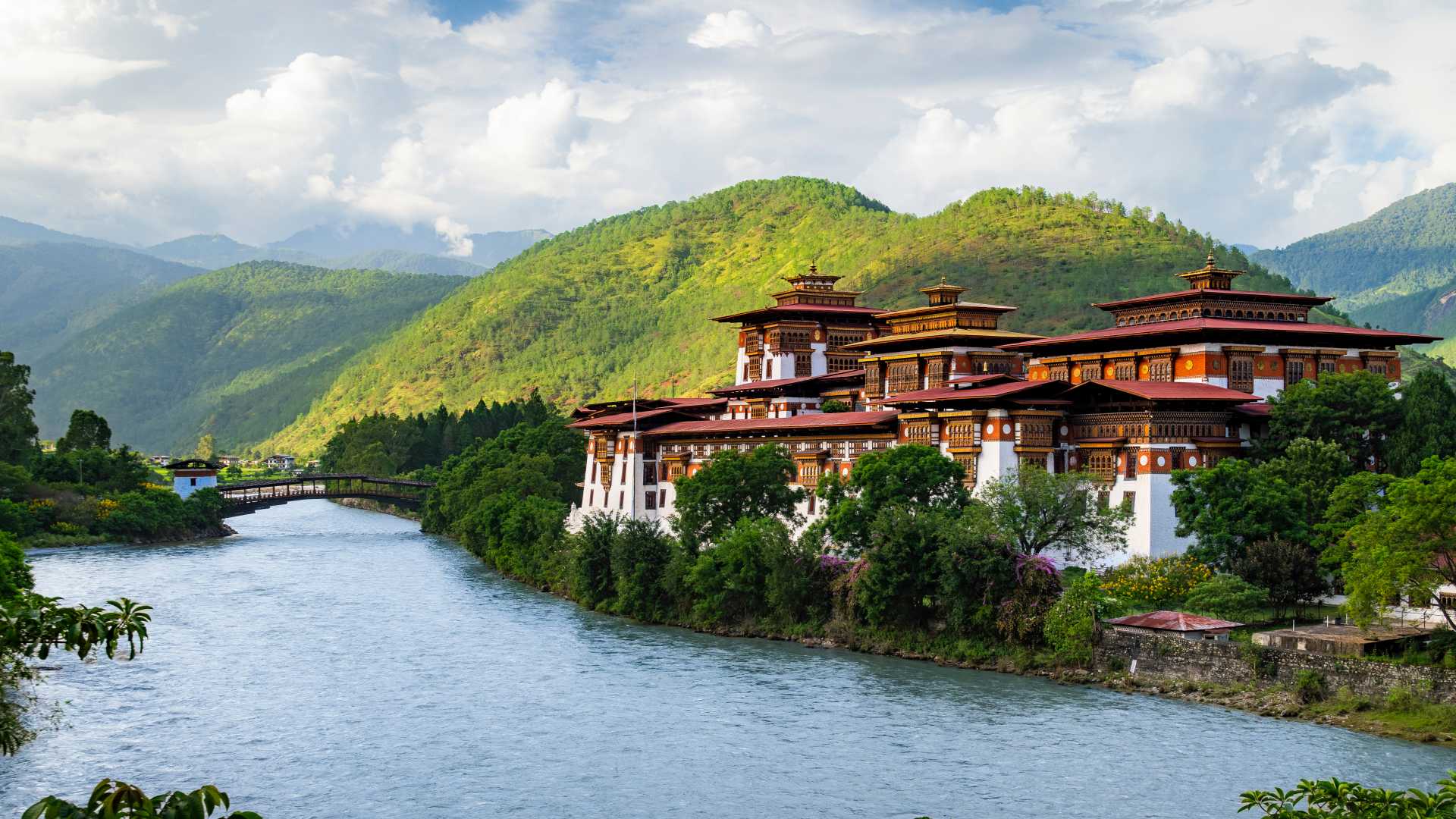
The Bhutan Tour (7N/8D) covers the best of western Bhutan. In Thimphu, you see the Buddha Dordenma statue and Tashichho Dzong. Then you cross Dochula Pass and enter the Punakha Valley. Punakha Dzong stands where two rivers meet. It is one of the most beautiful fortresses in the country. Nearby is Chimi Lhakhang, known as the Temple of Fertility. Back in Paro, you visit Rinpung Dzong and the National Museum.
The highlight is Tiger’s Nest Monastery. It clings to a cliff about 900 meters above the Paro Valley. The hike is steady and rewarding. The views over the forest and mountains are worth every step. Many travelers find it a deeply spiritual moment.
This tour lasts 8 days and is graded moderate. The highest point is 3600m. You stay in 3 or 4 star hotels and eat all meals on the tour. The price includes internal flights, a Bhutanese guide, entrance fees and travel permits. The Bhutan visa fee is not included, so plan for that separately.
Short on time? The Bhutan Tour 4N/5D is a good choice. It is 5 days long. You start in Paro and hike to Tiger’s Nest on day two. Then you move to Thimphu to see the National Memorial Chorten, Buddha Dordenma and Tashichho Dzong. It is a compact trip that still shows the heart of Bhutan.
Bhutan also needs advance planning. Visas for most travelers go through a licensed operator only. Utmost Destination handles this for you once you book.
With all three kingdoms covered, the next step is to put them together. Let us look at some sample itineraries.
Best Order for the Route
The order of your trip matters. It affects how you feel, especially in Tibet.
The best plan is simple. Start in Nepal, then go to Bhutan, and end in Tibet. Your body gets used to altitude slowly this way. Kathmandu sits at 1345m. Bhutan reaches up to 3600m on the Bhutan Tour (7N/8D). Lhasa is at 3650m. Everest Base Camp is the highest point at 5200m on the Lhasa EBC Tour.
If you go to Tibet first, the thin air can hit harder. Headaches and poor sleep are common on the first nights in Lhasa. Doing Nepal and Bhutan first gives you time to adjust.
There is one more reason to go in this order. Everest Base Camp makes a powerful finale. After the green valleys of Bhutan, the open plateau and the great mountain feel even more dramatic.
Every route returns through Kathmandu. Plan one rest day there between legs. It helps with repacking, laundry and permit checks. Utmost Destination can also change the order to suit your dates. Just use the Customize My Trip button on any package page.
Best Time to Visit Nepal, Tibet and Bhutan
Each kingdom has its own seasons. The good news is that they overlap in two windows. These are April to May and September to October. Choose one of them for your Nepal Tibet Bhutan tour.
Spring is mild and colorful. In Nepal, the weather is warm and the rhododendrons are in bloom. Bhutan looks its best, and the Paro Tshechu festival often falls in this season. Tibet has gentle weather and fewer tourists. The high areas can still be cold, so pack warm layers.
Autumn is the favorite season for many travelers. Skies are clear and the air is crisp. Nepal offers some of its best mountain views, and festivals like Dashain and Tihar fill the calendar. Bhutan hosts the Thimphu Tshechu. In Tibet, the weather is cool and stable, and Everest is often at its sharpest. This is also the busiest time, so book early.
Summer is harder. The monsoon hits Nepal and Bhutan from June to August. Trails may be muddy, roads slippery. Tibet is warmer, but it is also crowded. If you love wildlife, Bardia National Park can still be enjoyed in the rain.
Winter is cold, especially at Everest Base Camp. Some routes in Tibet may close because of snow. The low areas of Nepal, such as Kathmandu, Pokhara and Lumbini, stay pleasant. Bhutan is quiet and clear but very cold in the mountains.
Our advice is simple. For the full journey, travel in April to May or September to October. You can also check the season notes on the Lhasa EBC Tour and Bhutan Tour (7N/8D) pages. For more planning help, read our First Time Visitor’s Guide to Nepal.
Once you pick your dates, the next step is paperwork. Let us look at visas and permits.
Visas and Permits for Three Countries
Three kingdoms mean three sets of rules. Here is what you need to know.
Nepal
-
Visa: Tourist visas are available on arrival for most visitors at Tribhuvan International Airport. Or you can apply online from Nepal’s Immigration Department.
-
Duration: Visas come for 15, 30, or 90 days. Choose the one that fits your full trip.
-
Papassport: You must have a passport valid for 6 months. Bring copies. Copies.
Tibet
-
Chinese visa: You need a Chinese visa to enter Tibet. For many nationalities, it is issued as a group visa through your travel agency in Kathmandu.
-
Tibet Travel Permit: This permit is a must for every foreign visitor. Only a licensed agency can apply for it. Independent travelers cannot.
-
Extra permits: The Lhasa EBC Tour also needs an Alien’s Travel Permit and a military permit for the Everest area. Your operator arranges both.
-
Group travel: Foreign visitors must travel in an organized group with a licensed guide. Even two or three people count as a group.
-
Time of Processing: 15-20 days. Apply early, and do not book flights before your permits are confirmed.
-
Cost: The Tibet visa fee is included in the Lhasa EBC Tour. It is US$ 175 for US nationals and US$ 85 for others. On the Central Tibet Tour, the visa fee is not included.
Bhutan
-
Visa: Every traveler, except Indian, Bangladeshi and Maldivian citizens, needs a visa. It must be processed through a licensed Bhutanese tour operator. You cannot apply on your own.
-
Documentation: Passport must be valid for six months beyond date of entry. A copy of your itinerary is also required.
-
Approval letter: Print your visa approval before you travel. You show it at immigration when you land in Paro.
-
Tourism permit: The standard permit covers the main tourist areas. Your operator installs it. Special permits are required for places like Haa Valley.
-
Cost: visa fee is not included in the Bhutan Tour (7N/8D) and Bhutan Tour 4N/5D Put a separate budget on it.
Quick Tips
-
One booking: Book all legs with one operator. It keeps permits and dates aligned.
-
Order of paperwork: Start with Tibet, because it takes longest. Bhutan and Nepal come after.
-
Check before you fly: Rules can change. Confirm the latest requirements with your operator before travel.
Permits sorted, the next step is staying healthy at altitude. Let us look at altitude and health tips.
Conclusion
A Nepal Tibet Bhutan tour is one of the richest journeys in the Himalayas. You see three kingdoms, three landscapes and one shared spiritual thread. Kathmandu connects them all.
Start with the Best Of Nepal Tour for culture, wildlife and a gentle pace. Move on to the Bhutan Tour (7N/8D) for dzongs, quiet valleys and the hike to Tiger’s Nest. Then finish in Tibet. The Lhasa EBC Tour takes you to Everest Base Camp. The Central Tibet Tour is a shorter way to see Lhasa, Gyantse and Shigatse. Short on time? The Bhutan Tour 4N/5D is a compact option.
A few things make the trip smooth. Go in the right order, so your body adjusts to altitude. Travel in April to May or September to October. Apply for your Tibet permits early. Book all legs with one operator.
You do not need to fit your plans to a fixed package. Every route can be changed. Add days, swap tours or upgrade your hotels. Just use the Customize My Trip button on any package page.
Ready to plan your journey? Contact the Utmost Destination team on WhatsApp at +977 9861486320 or write to info@utmostdestination.com. We will build a Nepal Tibet Bhutan itinerary that fits your dates, your pace and your budget.