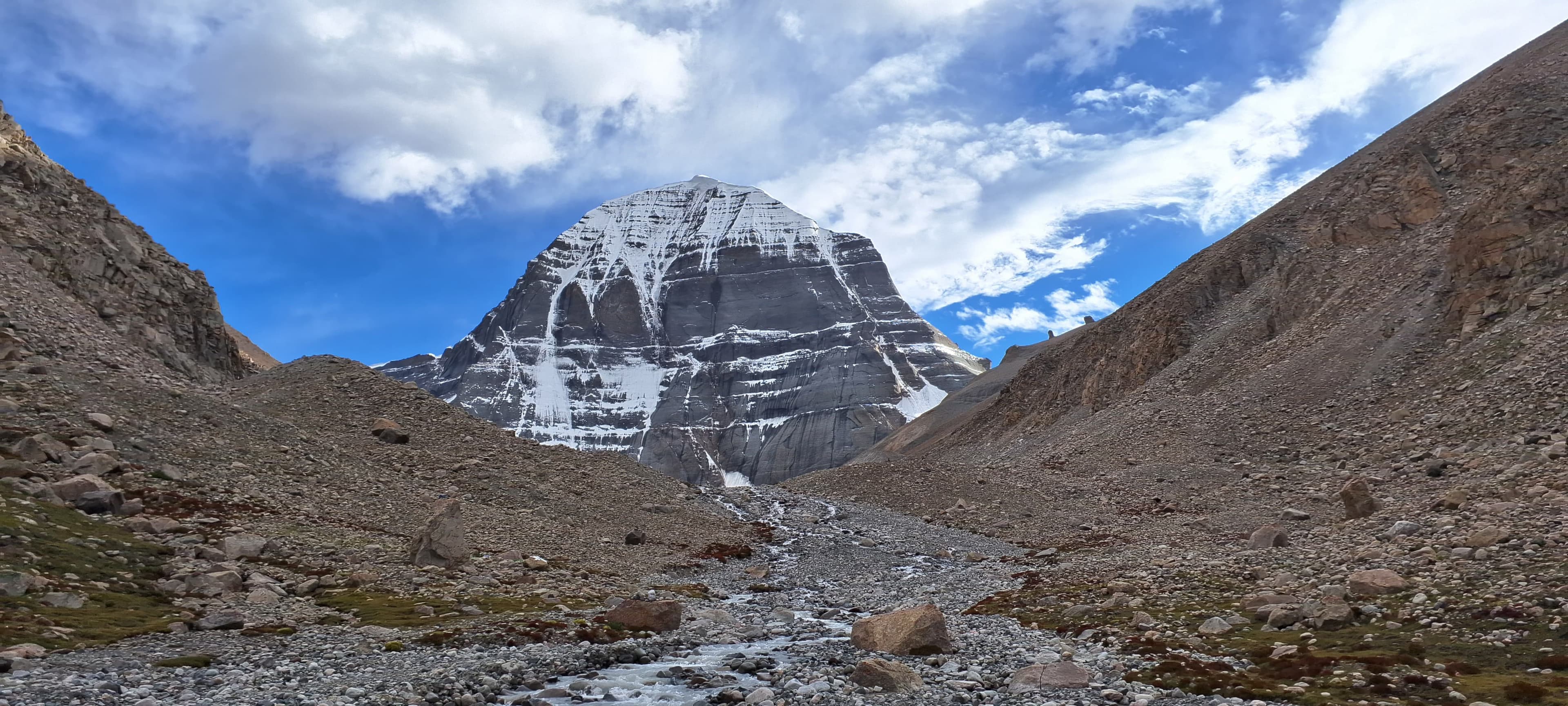
For many pilgrims, reaching Mount Kailash is a deeply spiritual goal. But before planning the journey, one practical question usually comes first: How difficult is the Mount Kailash Kora?
In conclusion, the Mount Kailash Kora is considered to be of medium to difficult level due to the high altitude, long hours of walking, rocky terrain, cold weather and low oxygen levels. It is not a technical climbing route. You do not need mountaineering skills for the normal Outer Kora. However, walking for several days at elevations above 4,500 meters makes the journey considerably more demanding than an ordinary hike.
The most difficult section is the Dolma La Pass, the highest point of the Kora at around 5,600 meters. Even physically fit travelers may find walking at this altitude slow and exhausting.
That does not mean the Kora is only for experienced trekkers. With realistic fitness preparation, sufficient acclimatization, a sensible pace, appropriate clothing, and experienced support, many travelers can approach the pilgrimage with greater confidence.
If you are considering a Mount Kailash Yatra guide explains the Kora distance, altitude, daily difficulty, fitness requirements, preparation, safety considerations, packing essentials, and available routes.
Mount Kailash Kora at a Glance
|
Factor |
Approximate Details |
|
Kora type |
Outer Kora / Parikrama |
|
Total distance |
Around 52 km |
|
Normal duration |
3 days |
|
Starting area |
Darchen / Yamadwar |
|
Highest point |
Dolma La Pass, around 5,600 m |
|
Terrain |
Rocky, uneven, high-altitude trail |
|
Main challenge |
Altitude and endurance |
|
Technical climbing |
Not required for the standard Outer Kora |
The standard Mount Kailash Parikrama is generally described as a roughly 52 km circuit completed over three days, with Dolma La forming the highest and most demanding section.
What Is the Mount Kailash Kora?
A Kora is the Tibetan term for walking around a sacred object or place as an act of devotion. In Sanskrit and many Indian traditions, the practice is commonly known as "parikrama."
Mount Kailash is a place of great spiritual significance in Hinduism, Buddhism, Jainism and the Bon tradition. Pilgrims travel from different parts of the world to see the sacred mountain and, when their health and circumstances permit, circumambulate it on foot.
For Hindu devotees, Mount Kailash is traditionally regarded as the abode of Lord Shiva. Other religious traditions associate the mountain with their own sacred teachings, deities, and spiritual histories.
Visiting the Mount Kailash region and completing the Kora are therefore not quite the same experience. Travelers can reach areas such as Darchen and see Mount Kailash without walking the entire circuit.
For those who undertake it, however, the Kora is often considered the physical and spiritual heart of the Kailash Manasarovar Yatra.
Outer Kora vs. Inner Kora
Travelers researching Kailash sometimes come across references to both the Outer and Inner Kora.
|
Outer Kora |
Inner Kora |
|
Standard pilgrimage circuit |
More demanding inner route |
|
Around 52 km |
Shorter but technically more difficult |
|
Usually completed over 3 days |
Requires additional considerations |
|
Commonly included in organized Yatras |
Access may be restricted |
|
No technical mountaineering required |
More rugged and challenging |
Most international pilgrimage itineraries focus on the Outer Kora, which is the route discussed throughout this guide.
How Difficult Is the Mount Kailash Kora?
The difficulty of the Mount Kailash Kora does not come from one single factor. It is the combination of altitude, distance, terrain, temperature and several days in a row that makes it a tough trip.
1. High-Altitude
Arguably the most important factor that affects the difficulty of the Mount Kailash Kora is altitude.
Much of the journey takes place at elevations where the air contains much less oxygen than at sea level. So even walking can be much more difficult.
You may find yourself breathing faster, walking slowly and needing to rest more often than you would at lower elevations.
This is why being a good runner or going to the gym regularly will not make the Kora easy automatically. Fitness is helpful, but it cannot replace proper acclimatization.
Slowly walking, giving the body time to adapt to a rising elevation, is a must.
2. Dolma La Pass
Dolma La Pass is the highest and usually the most demanding section of the Mount Kailash Kora.
At roughly 5,600 meters, reaching the pass involves a sustained ascent in very thin air. The combination of altitude, cold temperatures, wind, and steep terrain can make this section physically and mentally exhausting.
And the conditions may differ. Depending on the season's weather, the La Pass of the route may contain snow or ice.
Reaching Dolma La is only the first challenge. The descent can also be tiring because of rocky and uneven ground, especially after already spending hours climbing.
For most pilgrims, this is the day when careful pacing matters most.
3. Long Walking Distance
The complete Kailash Kora distance is around 52 km.
That figure may not sound extreme compared with longer Himalayan treks, but distance alone does not tell the whole story.
Walking 15–20 km at high altitude requires considerably more energy than covering the same distance at home. Travelers may spend many hours on the trail each day, followed by another walking day before their body has fully recovered.
Accumulated fatigue therefore becomes an important part of the challenge.
4. Rocky and Uneven Terrain
The Kora is not a smooth walking path.
You can expect a range of terrain, including dirt tracks, gravel, stones, rocky sections, gradual climbs, steep climbs and long descents. Snow or ice may also affect certain parts of the route depending on conditions.
Good, well-worn hiking shoes can make a big difference.
Trekking poles can also help some hikers stay balanced and reduce pressure on the knees during long descents.
5. Weather
Weather is another variable that can make the Kora fast easier or harder to play.
High-altitude conditions may include:
-
Cold Weather
-
Hard wind
-
brilliant sunshine
-
Rapid weather changes
-
Snow or ice sections
-
Large differences between day and night temperatures
So it makes more sense to layer your clothes than to put on one really thick jacket.
Mount Kailash Kora Difficulty: Day-by-Day Breakdown
Understanding each day separately gives a much clearer idea of what completing the Kora actually involves.
Day 1: Darchen/Yamadwar to Dirapuk – Moderate
The first day normally begins with travel from Darchen toward the Yamadwar area before the walking section starts.
Compared with Day 2, the route is generally more gradual. The trail introduces you to the altitude and provides you your first extended experience of walking around Mount Kailash.
One of the memorable aspects of this section is getting increasingly close views of the mountain as you continue toward Dirapuk.
Physically, the largest adjustment is often not the terrain but the elevation.
You may feel that you are walking unusually slowly even on relatively manageable sections. Rather than trying to maintain your normal hiking speed, settle into a sustainable rhythm.
Overall difficulty: Moderate, but altitude can make it feel harder.
Day 2: Dirapuk to Zutulpuk via Dolma La Pass—Challenging
Day 2 is generally the hardest part of the entire Mount Kailash trek.
The day often begins early because there is significant distance and elevation to cover.
From Dirapuk the trail climbs to Dolma La Pass. As you go higher, the lower oxygen levels become more obvious. Progress can be very slow. Usually taking short, controlled steps is more sustainable than trying to walk fast.
The last approach to Dolma La is one of the hardest stretches.
At the pass, prayer flags and the dramatic high-altitude landscape create one of the journey's most meaningful moments. But travelers should avoid staying exposed for longer than necessary when the weather is cold or windy.
After crossing the pass, the trail descends toward the area associated with Gauri Kund before continuing toward Zutulpuk.
Do not underestimate the descent. Loose rocks, uneven terrain, weary legs, and several additional walking hours mean the physical effort continues well beyond Dolma La.
Mental endurance becomes important on this day. Instead of thinking about the entire distance, focus on moving steadily from one section to the next.
Overall difficulty: Challenging.
Day 3: Zutulpuk to Darchen—Easier, but Fatigue Matters
The last day of walking is generally less demanding than the Dolma La crossing.
Eventually, the trek will take you to the Kora's end point before you return to Darchen.
The terrain is easier but you may still feel the effect of the previous two days. Sore legs, tired feet, poor sleep at altitude and general fatigue can make the last few kilometers seem longer than expected.
The Mount Kailash Parikrama ends here and it is an emotional moment for many pilgrims after three hard days around the sacred mountain to complete this section.
What Makes Mount Kailash Kora Challenging?
The main difficulty factors can be summarized simply as
-
Extreme altitude
-
Less oxygen
-
Long walks
-
Steep sections near Dolma Pass
-
Rough and uneven ground
-
Low temperatures
-
High winds
-
Mountain conditions that are unpredictable
-
Build-up of fatigue
-
Limited or basic facilities at parts of the Kora
This means the route is less about technical trekking ability and more about altitude tolerance, endurance, pace and preparation.
Is Mount Kailash Kora Difficult for Beginners?
Yes, the Mount Kailash Kora can be challenging for beginners, but previous Himalayan trekking experience is not necessarily required for the standard Outer Kora.
You do not need technical climbing skills.
What you do need is reasonable cardiovascular fitness, the ability to walk for several hours, patience, proper acclimatization, and realistic expectations about conditions.
A beginner who trains consistently and follows a carefully planned itinerary may be better prepared than an experienced hiker who rushes into high altitude without acclimatizing.
Travelers with existing health conditions, previous serious altitude problems, or concerns about high-altitude travel should discuss the journey with an appropriately qualified medical professional before departure.
No responsible operator should promise that “anyone can complete the Kora.” Individual responses to altitude vary considerably.
What fitness level is needed for the Mount Kailash Kora?
You do not need elite athletic fitness, but you should prepare your body for consecutive days of sustained walking.
Cardiovascular Endurance
You should become comfortable walking continuously for several hours.
Brisk walking, hiking, stair climbing, cycling, and similar activities can gradually improve endurance.
Leg Strength
Strong legs help enormously during the uphill approach to Dolma La and, just as importantly, during long descents.
Training can include hills, stairs, controlled squats, lunges, and regular walking.
Balance and Stability
Uneven and rocky ground requires reasonable balance.
Training on natural trails rather than only treadmills can help your body become accustomed to variable surfaces.
Mental Preparation
Physical fitness is only one part of the journey.
Patience is essential. High altitude forces most travelers to slow down.
Accepting a slow pace, dealing calmly with discomfort, and focusing on one section at a time can be just as valuable as physical strength.
How to Prepare for the Mount Kailash Kora
Preparation should begin well before you arrive in Tibet.
Start Walking Regularly
Walking is one of the simplest and most relevant forms of training.
Begin with short walks and work your way up to longer ones.
As your fitness improves, add longer weekend walks and routes with uphill and downhill sections.
Build Cardiovascular Fitness
Combine walking with activities such as:
-
Brisk walking
-
Hiking
-
Cycling
-
Stair climbing
-
Light jogging, if appropriate for you
Consistency is more useful than trying to complete extremely intense workouts shortly before departure.
Practice With a Daypack
During the Kora, you may carry water, extra clothing, snacks, personal items, and other essentials.
Practice some of your longer training walks with the daypack you expect to use.
Keep it as light as practical.
Prepare for Altitude
You cannot completely train for 5,600 meters while living at low altitude.
The most important preparation happens through a sensibly designed itinerary that allows gradual altitude gain and acclimatization.
Do not rush simply to shorten the trip by one or two days.
Practice Pacing
One of the most valuable skills for high-altitude trekking is learning to walk slowly.
Maintain a sustainable rhythm while taking regular breaks when necessary and avoid unnecessary bursts of exertion.
During the Kora, follow our guide's advice about pace and altitude conditions.
What to Bring on the Kailash Kora?
Your exact equipment will vary according to the season and current conditions, but useful essentials generally include:
-
Sturdy, broken-in trekking shoes
-
Warm base and insulating layers
-
Waterproof and wind-resistant outer layer
-
Warm gloves
-
Warm hat
-
Sunglasses
-
Sunscreen
-
Water bottle
-
Personal medication
-
Basic personal first-aid items
-
Trekking poles
-
Comfortable daypack
-
Headlamp
-
Lip balm
-
Moisturizer
Avoid packing unnecessary items into your daypack. At high altitude, even a small amount of extra weight can become tiring after several hours.
Always confirm the final packing list with your operator because seasonal conditions and logistical arrangements can change. For detailed information regarding the packing list, you can read our blog: Packing List for Kailash Manasarovar Yatra
How Does Acclimatization Help During the Kailash Yatra?
Acclimatization allows your body time to adjust progressively to lower oxygen availability at higher elevations.
This is one of the most important parts of Kailash Yatra preparation.
A good itinerary should not simply transport you rapidly toward Darchen and begin the Kora immediately. Gradual elevation gain and appropriate rest periods help travelers adapt before attempting Dolma La.
Listen carefully to your body during the journey.
Headache, unusual fatigue, nausea, dizziness, shortness of breath at rest, confusion, or other concerning symptoms should not simply be ignored in an attempt to continue the pilgrimage.
Inform your guide promptly about symptoms and follow professional or medical advice when required.
For route planning, permits, logistics, and other preparation details, travelers can also read Utmost Destination's Kailash Manasarovar Travel Guide.
Is Mount Kailash Kora Safe?
The Kora is completed by pilgrims every operating season, but it should never be described as completely risk-free.
The main concern is high altitude.
Weather can change quickly and it can be cold; rough terrain, tiredness and limited facilities can all add to the problems.
To limit unnecessary risks:
-
Listen to your guide;
-
Don’t race with other pilgrims.
-
Let him get used to it a little bit.
-
Drink lots of fluids.
-
Use protection from cold, wind and sun.
-
Discuss any medical concerns you may have with a doctor.
-
Don’t dismiss serious altitude illness symptoms.
-
Be ready to change plans if the situation requires it.
Organized yatra packages may include guides, transportation, permits, hotels and logistical support, but travelers still need to take the altitude seriously.
Can You Complete the Kailash Kora Without Walking the Entire Route?
Completing the Kora on foot is optional.
If a traveler becomes unwell, does not feel physically capable of continuing, or decides before the Kora that walking is unsuitable, alternatives may include remaining in Darchen or participating only in suitable parts of the journey.
Local porter or animal assistance may sometimes be available, depending on regulations, local arrangements, weather, and availability.
These services should never be assumed or advertised as guaranteed.
If you believe you may need assistance, discuss the options with your tour operator before departure.
It is never a failure to turn back or to stop because of health concerns. Planned itineraries at altitude are subordinate to safety rules.
Best Time for Mount Kailash Kora
Utmost Destination currently describes the general operating period for the Kailash Manasarovar Yatra as approximately April to October, although exact operating conditions depend on permits, weather, route access, and seasonal services.
Conditions vary significantly within that period.
Early and late-season departures may experience colder temperatures and a greater possibility of difficult trail conditions. Weather around Dolma La can also change independently of conditions at lower elevations.
When choosing a departure date, consider:
-
Temperature
-
Snow conditions
-
Rain and cloud patterns
-
Trail conditions
-
Group availability
-
Festival and pilgrimage periods
-
Personal tolerance for cold
-
Current permit and border arrangements
Because access rules and operating conditions can change, travelers should confirm the latest information rather than relying on an old travel article.
Which Kailash Manasarovar Route Is Best for You?
Your route to Mount Kailash can affect the overall duration, comfort, sightseeing opportunities, and acclimatization pattern of your Yatra.
Utmost Destination currently offers Kailash journeys through Kerung, Hilsa, Lhasa, and Lhasa–Ali itineraries.
Kailash Manasarovar via Kerung
The Kerung route is a classic overland approach from Nepal to Tibet.
It is suitable for travelers who prefer a road-based pilgrimage and want a traditional overland Kailash experience.
Kailash Manasarovar From Hilsa.
The Hilsa route takes Nepalgunj, Simikot and Hilsa, with part of the journey by flight and helicopter in Nepal.
It’s a very different logistical experience than the overland journey to Kerung.
Kailash Manasarovar via Lhasa
Travelers who want to combine pilgrimage with a broader cultural experience in Tibet can consider the Lhasa route.
The itinerary can include major cultural landmarks such as Potala Palace and Jokhang Temple before continuing toward Mount Kailash. Utmost's present Lhasa itinerary also includes additional Tibet sightseeing before the Kora.
Luxury Kailash Manasarovar via Lhasa–Ali
The Lhasa–Ali route is positioned for travelers looking for a higher-comfort journey and faster access to western Tibet through additional flights.
Utmost's current itinerary combines Lhasa and Ali with higher-standard accommodation where available before continuing toward Manasarovar and the Kailash Kora.
The best route depends on your available time, desired comfort level, acclimatization preference, budget, and the type of pilgrimage experience you want.
Mount Kailash Kora vs. Other Himalayan Treks
Mount Kailash is difficult to compare directly with a conventional Himalayan trek because the purpose and itinerary are different.
|
Factor |
Kailash Kora |
Everest Base Camp |
Annapurna Circuit |
Manaslu Circuit |
|
Main challenge |
Altitude + Kora |
Altitude + duration |
Altitude + duration |
Altitude + duration |
|
Technical climbing required |
No |
No |
No |
No |
|
Major high section |
Dolma La |
High-altitude EBC region |
Thorong La |
High mountain pass |
|
Main purpose |
Pilgrimage |
Trekking/adventure |
Trekking/adventure |
Trekking/adventure |
|
Typical character |
Shorter, intense high-altitude circuit |
Longer trekking journey |
Multi-day mountain circuit |
Remote mountain circuit |
It would be misleading to declare one universally “harder” than another.
Someone accustomed to long trekking days may find the Kailash walking distance manageable but struggle with its altitude. Another traveler may adapt well to altitude but find the consecutive walking hours demanding.
The difficulty always depends on the itinerary, the conditions, the preparation and the individual.
10 Practical Tips for Completing the Kailash Kora
-
Start training early instead of hitting the gym hard right before you go.
-
Allow yourself plenty of time to adjust before you start the Kora.
-
Walk slowly. Walk at a pace you can sustain for a few hours.
-
Stay hydrated while you travel.
-
Cover yourself against cold and strong sunlight at high altitude.
-
Pack light; bring just the essentials in your daypack.
-
If you find trekking poles help with balance and comfort, then by all means use them.
-
Listen to your guide, especially about weather and altitude.
-
Never ignore serious altitude symptoms just to complete the Kora.
-
Don't always think about how far you still have to go—take the journey one section at a time.
Frequently Asked Questions About Mount Kailash Kora
How difficult is the Mount Kailash Kora?
The standard Outer Kora is generally moderate to challenging. The biggest difficulties are high altitude, long walking hours, cold conditions, and the crossing of Dolma La Pass.
How many kilometers is the Kailash Kora?
The standard Mount Kailash Outer Kora is approximately 52 km.
How many days does the Kailash Kora take?
It is commonly completed over three walking days, although specific itineraries and operational arrangements can vary.
What is the hardest day of the Kailash Kora?
The journey from Dirapuk toward Zutulpuk via Dolma La Pass is generally considered the most demanding because it combines the highest altitude, a steep ascent, a long descent, and many hours of walking.
How high is Dolma La Pass?
Dolma La is approximately 5,600 metres above sea level, making it the highest point of the standard Kailash Kora.
Can beginners do the Mount Kailash Kora?
A beginner with reasonable fitness and proper preparation may be able to undertake the Kora. Previous high-altitude trekking experience is helpful but not automatically required.
Do I need previous trekking experience for Kailash?
Not necessarily. Our standard Outer Kora does not require technical climbing skill. However, previous hiking experience can help you understand pacing, equipment, and long walking days.
How should I prepare for Kailash Kora?
Begin your usual walking and cardio training weeks or months ahead. Build up your legs. Practice walking up and down hill. Select an itinerary that permits proper acclimatization.
Is Mount Kailash Kora safe?
The Kora involves genuine high-altitude risks, so safety depends on proper acclimatization, sensible pacing, current conditions, individual health, and following professional guidance. Serious altitude symptoms should never be ignored.
What happens if I cannot complete the Kora?
Completing the Kora is not compulsory. Depending on circumstances, travelers may stop, return, remain in Darchen, or use locally available assistance where permitted and available.
What should I pack for the Kailash Kora?
Bring sturdy trekking shoes, warm layers, waterproof and windproof clothing, gloves, sunglasses, sunscreen, water, any personal medication you may need, a daypack, and a headlamp and trekking poles.
What is the best time to do the Mount Kailash Kora?
The main operating period generally falls between April and October, but the best individual departure depends on weather, trail conditions, permits, route access, and your travel preferences.
Plan Your Mount Kailash Yatra with Utmost Destination
The Mount Kailash Kora is demanding, but its difficulty comes mainly from altitude, endurance, terrain, and changing mountain conditions rather than technical climbing.
Preparation makes a meaningful difference.
Train your body before traveling, choose an itinerary that allows proper acclimatization, walk at a sustainable pace, pack appropriately, and take altitude symptoms seriously.
Most importantly, choose your Kailash route according to your own comfort level, available time, acclimatization needs, budget, and travel preferences rather than simply choosing the shortest itinerary.
Utmost Destination organizes guided Kailash Manasarovar tours through Kerung, Hilsa, Lhasa and Lhasa-Ali routes so that travelers can choose an itinerary as per their travel styles.
Verify the packages of Utmost Destination for Kailash Manasarovar Yatra or contact our team to customize a pilgrimage trip to Mount Kailash.