Gosaikunda Helicopter Tour Experience on the Shiva Circuit of Nepal
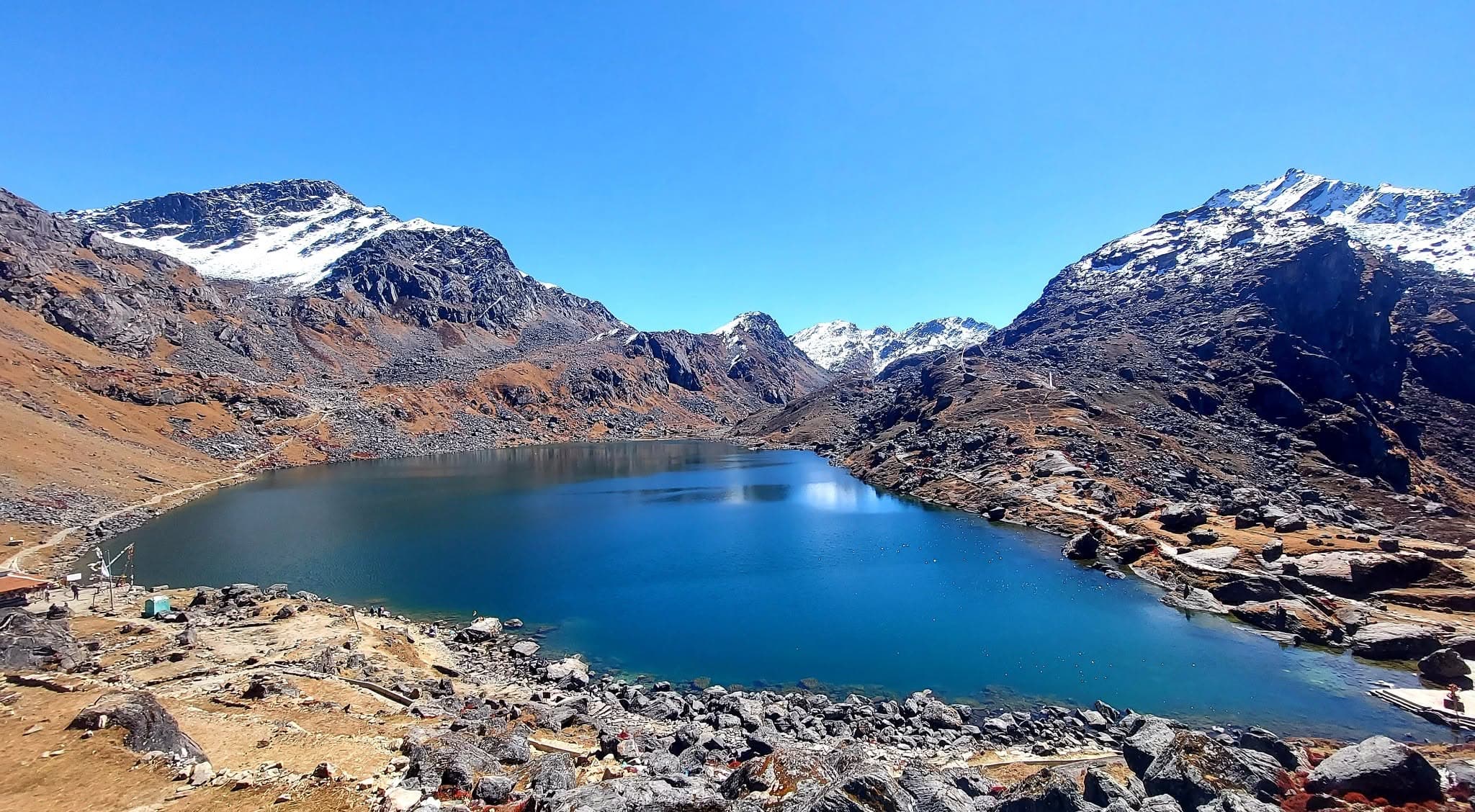
The Gosaikunda helicopter tour is the highlight of your Shiva pilgrimage Nepal journey. From Kathmandu, the helicopter climbs quickly over the Kathmandu Valley and into the Langtang area, where you will have panoramic views of terraced hillsides, forested ridges and the Langtang mountain range ahead. Inside the cabin, quiet anticipation replaces the city noise as the terrain below grows more remote and wild. About half an hour or 40 minutes later you see the alpine lake. Its placid waters are framed by peaks sprinkled with snow. It's one of the most spectacular sights on the trip.
Arriving at Gosaikunda is like entering another world. The air is thin and cold, the silence is absolute and the lake itself has a deep spiritual significance as the place where Shiva is said to have struck his trident into the mountain. You’ll have 20 to 30 minutes to walk along the shore, taking in the surrounding peaks and atmosphere before returning in the helicopter for the flight back. This short but powerful experience becomes one of the most memorable parts of the entire Shiva circuit Nepal journey for many travelers, offering a high-altitude pilgrimage without the physical demands of a multi-day trek.
Best Time to Visit the Shiva Circuit of Nepal for Your Shiva Pilgrimage
The best time to undertake a Shiva pilgrimage Nepal journey is generally in autumn, from September to November. The skies are clear, the days warm, and the nights cool, perfect for temple visits and mountain drives. This window also coincides with major festivals like Dashain and Tihar, making stops like Pashupatinath and Halesi Mahadev more colorful and ritualistic. The clear autumn skies also mean better visibility and safer flying conditions for that leg of the journey, as the trip includes a helicopter flight to Gosaikunda at 4,380 meters.
The second strong option for the Shiva circuit in Nepal is spring, March to May. You’ll enjoy mild temperatures, the rhododendrons in bloom all over the hills, and the Holi festival adds a festive touch to your time in Kathmandu. You can also trek in winter (December to February) but it gets cold in higher points such as Muktinath and Gosaikunda so pack accordingly. Avoid the monsoon season from June to August. Heavy rain can affect the road conditions on the long drives to Halesi and Janakpur and cloud cover often grounds the Gosaikunda helicopter flight altogether.
Food and Accommodation on the Shiva Circuit of Nepal Pilgrimage
Food on your Nepal Shiva pilgrimage is a blend of comfort and local flavor. Kathmandu and Pokhara have a wonderful variety of Nepali and international food. You can get the traditional dal bhat as well as momos, noodles and thukpa. Meals in smaller towns such as Halesi and Jomsom tend to be simpler and more local, often served at your lodge with seasonal vegetables and hearty soups. You can also try Thakali food and local apple products from Marpha along the Kali Gandaki route near Muktinath and Jomsom, a welcome change from the usual trekking food.
On the Nepal route of the Shiva circuit, accommodation varies with the terrain. You will be accommodated in comfortable 3-star hotels in Kathmandu, Bhaktapur, Janakpur and Pokhara with modern facilities. In Halesi and Jomsom there are fewer options, so expect clean but basic lodges or guesthouses, as befits smaller pilgrimage towns. This mix makes the trip comfortable in the cities but still true to the character of more remote sacred sites along the way.
Permits and Travel Documents for the Shiva Circuit of Nepal
Before you start your Nepal journey for the Shiva pilgrimage, you need to sort out a few travel documents. Nepal tourist visa Most travelers can obtain a Nepalese visa on arrival at Tribhuvan International Airport. It is also possible to arrange a Nepal visa in advance through a Nepalese embassy. You will need a National Park Entry Permit for your trip to the Langtang National Park. Your itinerary includes a helicopter flight to Gosaikunda inside the National Park. Always keep photocopies of your passport and any permits. We strongly recommend travel insurance, as this route is a combination of high altitude stops and remote areas.
-
Valid passport with 6 months validity
-
Nepal Tourist Visa (on arrival or from the embassy)
-
Langtang National Park permit for Gosaikunda Helicopter flight
-
Photocopies of passports and permits, separate from the original
-
Travel insurance for high-altitude travel (advised for Muktinath and Gosaikunda)
Why Visit the Shiva Circuit of Nepal for a Shiva Pilgrimage
There are many reasons for travelers to choose this route for a Shiva pilgrimage in Nepal rather than a regular sightseeing trip:
One Trip, Many Sacred Shiva Sites: This route links several of the most sacred Shiva temples in Nepal, from Pashupatinath to Halesi Mahadev to Gosaikunda, places that would normally take several separate trips to visit.
A Complete Char Dham Experience: The itinerary touches all four of Nepal's Char Dham sites, Pashupatinath, Muktinath, Baraha Kshetra, and RuRu Kshetra, making it a rare, complete pilgrimage rather than a partial one.
Cultural and Mythological Depth: Nearly every stop ties back to a specific legend, whether it's Shiva hiding in the Halesi cave or striking his trident at Gosaikunda, giving the trip real storytelling weight alongside the spiritual experience.
Scenic Variety: Few trips combine cave temples, alpine lakes, river confluences, and mountain-top shrines in a single circuit. You'll move through the Kathmandu Valley, the Terai plains, and high Himalayan terrain over fourteen days.
Time Efficient Access to Remote Sites: With the Gosaikunda helicopter flight and domestic connections to Janakpur and Pokhara, this Shiva circuit Nepal route reaches places that would otherwise require days of extra trekking or driving.
Local Festivals and Cultural Events on the Shiva Circuit of Nepal
While traveling on this Nepal Shiva pilgrimage route, you may encounter some of the most colorful religious festivals of Nepal, many of which are directly associated with the temples on your itinerary. Plan your trip around one of these events and you will add an extra layer of color, ritual and devotion to your journey.
- Maha Shivaratri (February to March): The most significant festival for this circuit, celebrated intensely at Pashupatinath and Gupteshwor Mahadev Cave, drawing thousands of devotees for prayers and offerings to Lord Shiva.
- Dashain (September to October): Nepal's largest festival, marked by family gatherings and prayers, celebrating the victory of good over evil
- Tihar (October to November): The Festival of Lights, when homes are decorated and animals like dogs and cows are honored
- Teej (August to September): An important festival for women, involving fasting, dancing, and devotion to Lord Shiva
- Janai Purnima (August): A day when men change their sacred thread, closely linked to the Gosaikunda pilgrimage tradition
- Ridi Mela at RuRu Kshetra (Maghe Sankranti, January): A three-day fair held at the sacred river confluence, when pilgrims take a holy bath believed to bring moksha
Altitude and Health Notes for the Shiva Circuit of Nepal
-
This Shiva circuit Nepal route mixes lowland stops with two high-altitude points: Gosaikunda (4,380m) and Muktinath (3,800m)
-
The Gosaikunda helicopter flight allows you to reach high altitude quickly without a multi-day trek, but be aware of possible mild altitude effects like headache or shortness of breath
-
Time spent on the ground at Gosaikunda is limited to around 20 to 30 minutes, which reduces prolonged high-altitude exposure
-
The drive to Muktinath involves a more gradual altitude gain through Jomsom, giving your body more time to adjust
-
Stay hydrated throughout the trip, especially on the days involving Gosaikunda and Muktinath
-
Avoid alcohol on the days leading up to and during high-altitude stops
-
Travelers with heart or respiratory conditions should consult a doctor before booking this itinerary
-
Basic altitude sickness medication is worth carrying, and our guides are trained to recognize early symptoms
-
If you have any pre-existing health conditions, inform our team in advance so we can plan accordingly
Spiritual Etiquette and Rituals on the Shiva Circuit of Nepal
-
Dress Modestly: Cover shoulders and knees when visiting temples on this Shiva pilgrimage Nepal route; some sites also require covering your head.
-
Remove Shoes Before Entering: Before entering temples and cave shrines like Halesi Mahadev and Gupteshwor Mahadev, remove your shoes.
-
Circumambulate Clockwise: Walk clockwise around temples, statues and sacred sites in respect.
-
Humbly Offer Prayers: Simple and sincere gestures are common, such as flowers, fruits or small offerings.
-
Stay Quiet Inside Temples. Do not make loud talk or noise inside temples, especially inside cave temples like Halesi and Gupteshwor (Gupteshwor Mahadev Cave).
-
Namaste to the Neighbors: In all of Nepal, palms pressed together is the standard greeting.
-
Ask Before You Take Pictures: Always ask permission for taking photographs of priests, rituals or people in temples.
-
Don’t Touch Sacred Objects: Only touch statues or idols if invited to do so by a priest or guide.
-
Use Official Donation Boxes: Donate through official donation boxes instead of giving money directly
-
Respect for Existing Rituals: If you are present at a ceremony, stay away and do not interfere